
Thinker Small Animals: That Careful Pause Before They Approach Is the Whole Strategy
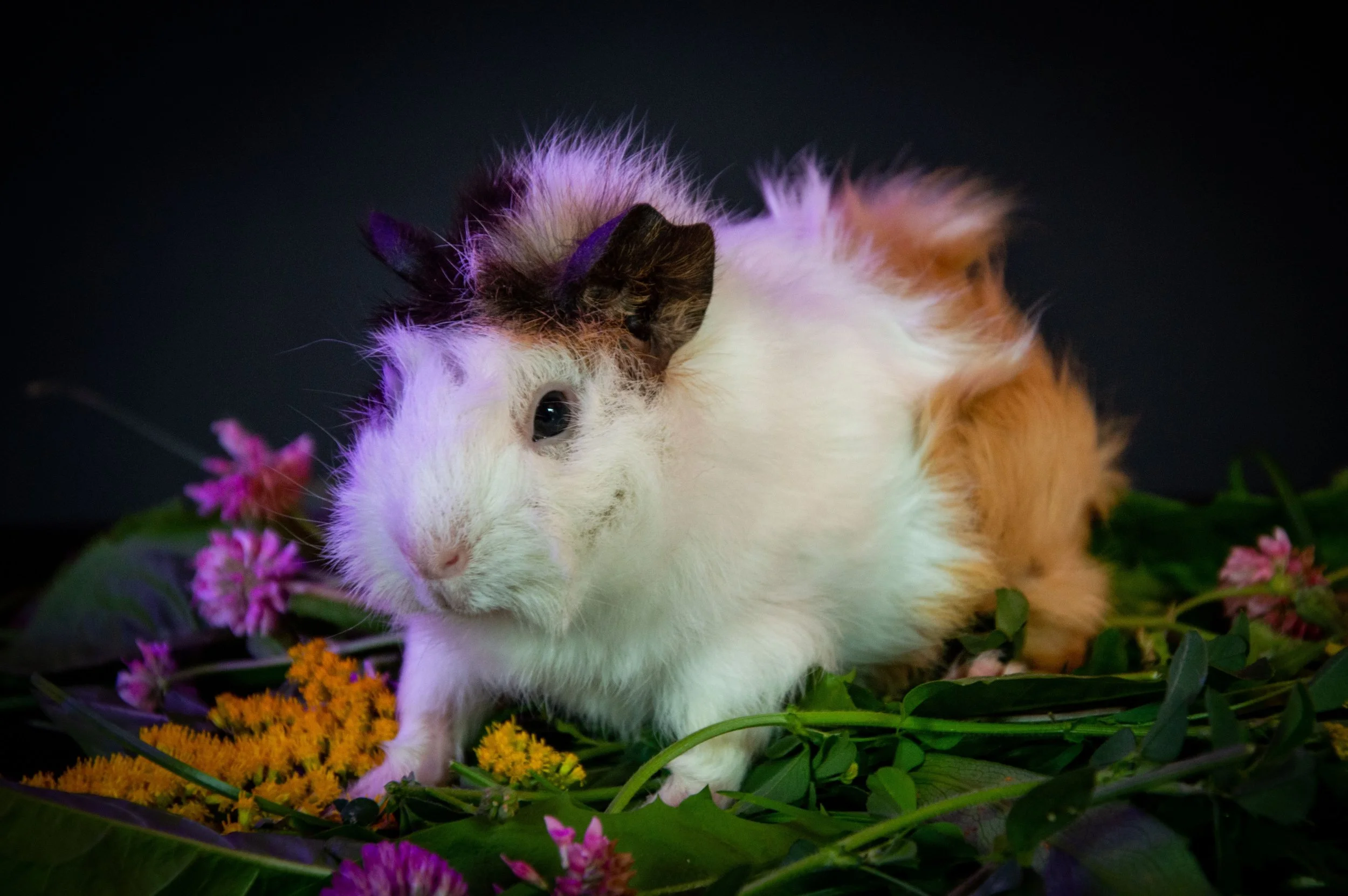
An enrichment guide for Thinker rabbits, guinea pigs, and chinchillas in Madison, Fitchburg, Middleton & Verona
If your rabbit studies a new hide for a long moment before stepping inside, your guinea pig pauses to think rather than popcorning straight toward something new, or your chinchilla tests a surface carefully with their whiskers before committing to a hop, you might be caring for a Thinker.
Thinker-type small animals are the quiet analysts of the small pet world. They don't dash into new things or lean primarily on social comfort. They observe, assess, and act with intention. Their minds crave pattern, predictability, and gentle, step-by-step engagement, not fast action or high-intensity play. None of this means they're timid. It means they're careful, and careful is a perfectly good way to be a prey animal.
The goal with a Thinker-type small animal isn't to speed them up. It's to give them small, achievable problems to work through at their own pace, in an environment stable enough that their minds have room to focus. Done well, this kind of enrichment builds genuine confidence rather than just filling time.
If your pet took the Sploot Enrichment Quiz and landed as a Thinker, this guide is for them.
Is This Your Pet?
Thinker-type small animals show curiosity in quiet, deliberate ways. A few shared signs across species: they watch before interacting, studying new items, layouts, or people from a distance before approaching. They investigate slowly and methodically, sniffing, pausing, and using whiskers or gentle touches to gather information rather than diving in. They strongly prefer predictable environments, and sudden layout changes or loud noises tend to cause real stress. They engage best when tasks are broken into small steps, and they can show frustration, stepping away, freezing, or rapid sniffing, if a challenge is too much too soon.
Species-specific tells are worth knowing, too. Rabbits often sniff items in a slow, circular path and test objects with gentle nudges before fully interacting. Guinea pigs frequently approach puzzles cautiously, sometimes retreating to "think" before trying again, and they study your hand or voice before engaging. Chinchillas touch new objects lightly with their forepaws or whiskers and often observe from a safe perch before approaching anything new.
If your pet seems thoughtful, observant, and a little deliberate about everything, enrichment that respects that pace, rather than trying to override it, is what will actually help them feel capable and secure.
Why Cognitive Enrichment Changes Everything
Rabbits, guinea pigs, and chinchillas may be prey species, but they're far from simple. All three rely on problem-solving to survive in the wild, using scent, whiskers, and careful object investigation to assess what's safe. Cognitive enrichment, things like pattern recognition, foraging puzzles, and controlled choice-making, taps directly into those instincts, and research shows these activities reduce stress and support healthy brain function in small mammals.
There's a useful parallel here to the neophobia research on guinea pigs, who are notably fearful of novelty and can stop eating in response to a dramatic change. The same underlying principle applies to cognitive enrichment for Thinkers across all three species: success needs to come early and often. A puzzle introduced at the right difficulty builds confidence. The same puzzle, introduced too hard, too fast, builds avoidance instead. The Fear Free framing for this is simple: success builds confidence, confidence builds calmness, and calmness supports overall well-being.
From a practical standpoint, this means starting every cognitive activity at its easiest version, increasing difficulty in very small increments, one new element at a time, and always ending on a win. For Thinker-type small animals, this isn't being overly cautious. It's the actual mechanism by which their minds become more confident over time.
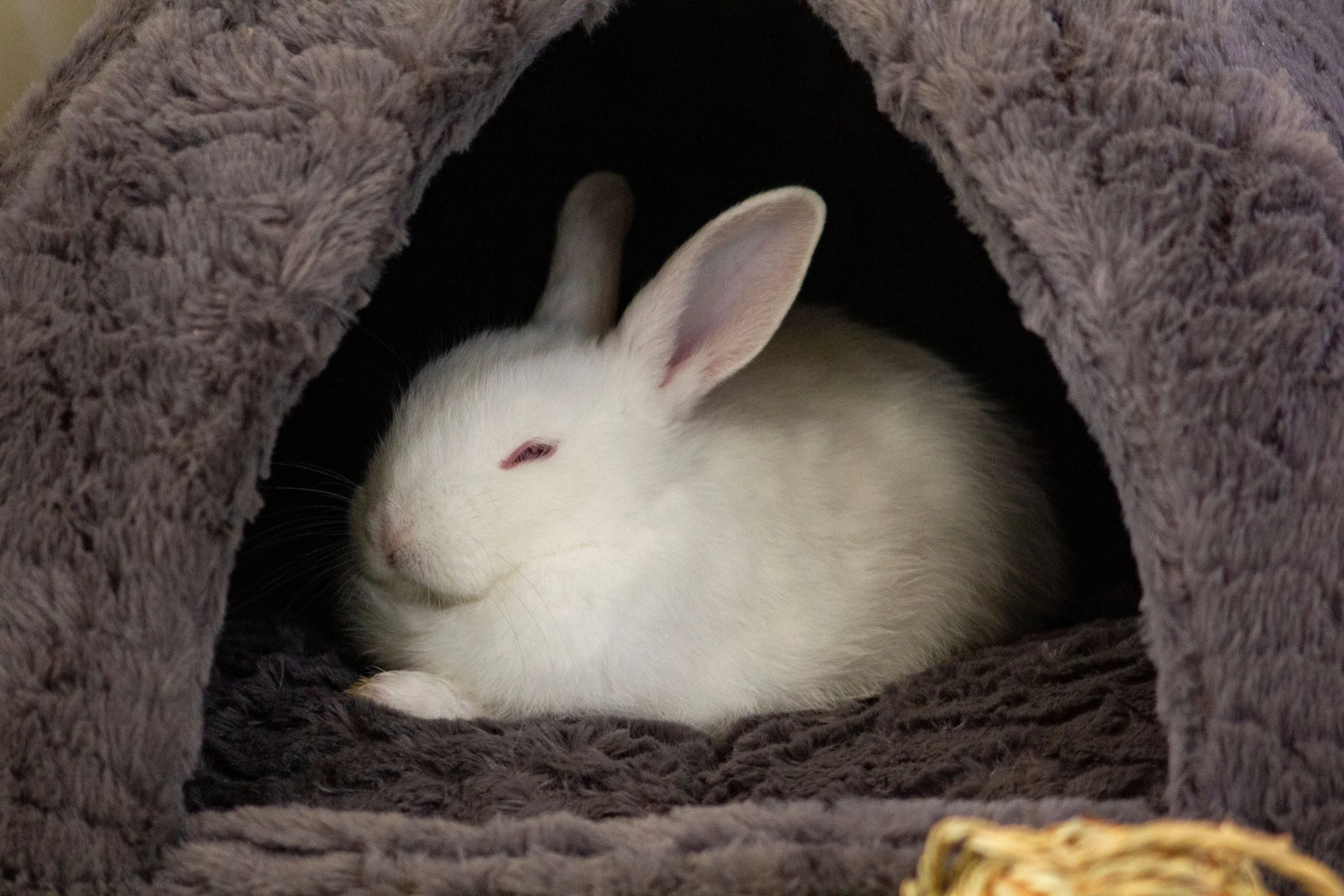
Setting Up Your Home for a Thinker
Each species benefits from a calm, organized environment, but the details differ slightly.
Rabbits do well with low platforms and steady footing, plus moderate novelty introduced slowly rather than all at once. A calm, quiet investigation zone where they can approach new items without distraction supports their naturally methodical style.
Guinea pigs need ground-level spaces only, with very low-intensity puzzles and highly predictable layouts. Given how sensitive this species is to change, it's often more effective to rearrange familiar items occasionally than to introduce frequent new objects.
Chinchillas thrive in cool, quiet rooms with stable shelves and hides, and minimal clutter. Because they assess safety through careful, whisker-led investigation, a cluttered or constantly changing space can become genuinely overwhelming rather than interesting.
Across all three, predictable lighting, low noise, and stable hide locations give Thinker-type animals the calm baseline their minds need before any kind of puzzle becomes enjoyable rather than stressful.
8 Enrichment Ideas Thinker Small Animals Love
Simple shell game. Hide a small treat under one of two lightweight cups and let your pet investigate. This is an excellent low-stakes way to build decision-making and gentle persistence. For rabbits, use wide, low containers they can nudge easily. For guinea pigs, lift the cup slightly if needed so they don't get frustrated early on. For chinchillas, keep sessions very short.
Beginner puzzle feeder. Choose a puzzle that requires just one simple action, a nudge, lift, or slide, to release food. Thinkers genuinely excel with this kind of step-by-step logic. Rabbits do well with nose-friendly sliders. Guinea pigs need shallow compartments. For chinchillas, stick to hay-based or herb-only puzzles.
Treat path mapping. Create a short scent or treat trail leading to a hidden reward. This supports scent tracking and builds spatial memory through slow, thoughtful investigation. Rabbits can follow small pellets or herb sprinkles. For guinea pigs, space tiny veggie pieces widely along the trail. For chinchillas, keep trails extremely short and hay-based.
Box puzzle with flaps. Cut a few flaps into a cardboard box and hide treats underneath. This encourages gentle object manipulation and controlled exploration. For rabbits, make sure flaps are loose and easy to lift. Keep openings wide for guinea pigs to avoid anything that feels like a tight space. For chinchillas, use sturdy, dry cardboard only.
Forage board. Set up a shallow board with a few small "stations" containing hay, herbs, fleece strips, or cardboard pieces. Thinkers genuinely enjoy scanning and choosing among options, which supports both autonomy and gentle decision-making. Rabbits benefit from multiple hay textures. For guinea pigs, keep items low-scent and easy to access. Chinchillas should get dry hay or chew stations only.
"Which hide has the treat?" game. Place a treat inside just one of several hides or small boxes and let your pet investigate to find it. This encourages slow, scent-based investigation and builds persistence. Use two or three large hides spaced out for rabbits. Keep hides shallow for guinea pigs to avoid triggering fear responses. For chinchillas, use stable wooden hides rather than soft fabric ones.
Slow target training. Teach your pet to touch a target stick or your hand with their nose, rewarding each small success. This is a genuinely ideal task for Thinkers, since it's clear, step-by-step, and choice-based. Rabbits often take to this quickly and can build simple trick chains over time. Keep guinea pig sessions to just five or ten seconds at a time. For chinchillas, use slow, predictable motions to avoid any startle.
The choice board. Offer two or three simple puzzle options and let your pet choose which to engage with first. Thinkers tend to love this kind of gentle autonomy, and the act of choosing itself reduces stress compared to a single imposed task. This works especially well for confident-but-cautious rabbits. Keep guinea pig choices very low-arousal, and chinchilla options cool, dry, and stable.
How Sploot Pet Concierge Supports Thinker Small Animals
Our in-home small animal sitting visits for Thinker-type pets are built around calm, structured cognitive enrichment, introduced at your pet's pace and adjusted so they experience early wins. For rabbits, that might mean nose-targeting and simple foraging puzzles in a stable environment. For guinea pigs, extremely simple, scent-forward puzzles in short, encouraging sessions. For chinchillas, low-pressure exploration in cool, quiet rooms with predictable objects. We serve Thinker-type small animals across Fitchburg, Madison, Middleton, and Verona, and we pair each pet with a small, consistent caregiver team who learns their pace and keeps challenges calibrated to build confidence rather than frustration.
Our Fear Free Certified approach means every interaction stays choice-based, soft-paced, and reward-focused. We never rush a Thinker toward a harder version of anything before they're ready, because for this type, the small wins are the whole point.
Ready to Support That Quiet Brilliance?
Thinker-type small animals remind us that intelligence doesn't have to be loud or fast to be real. A careful pause before approaching something new, a slow investigation, a small puzzle solved at exactly the right pace, these are signs of a genuinely thoughtful mind at work. If you're ready to book Fear Free Certified care for your Thinker in Dane County, we'd love to meet them.
Also explore: The Sploot Enrichment Quiz | In-Home Small Animal Sitting | Small Animal Care
