
Thinker Cats: That Stare Isn't Judgment. It's a Calculation.
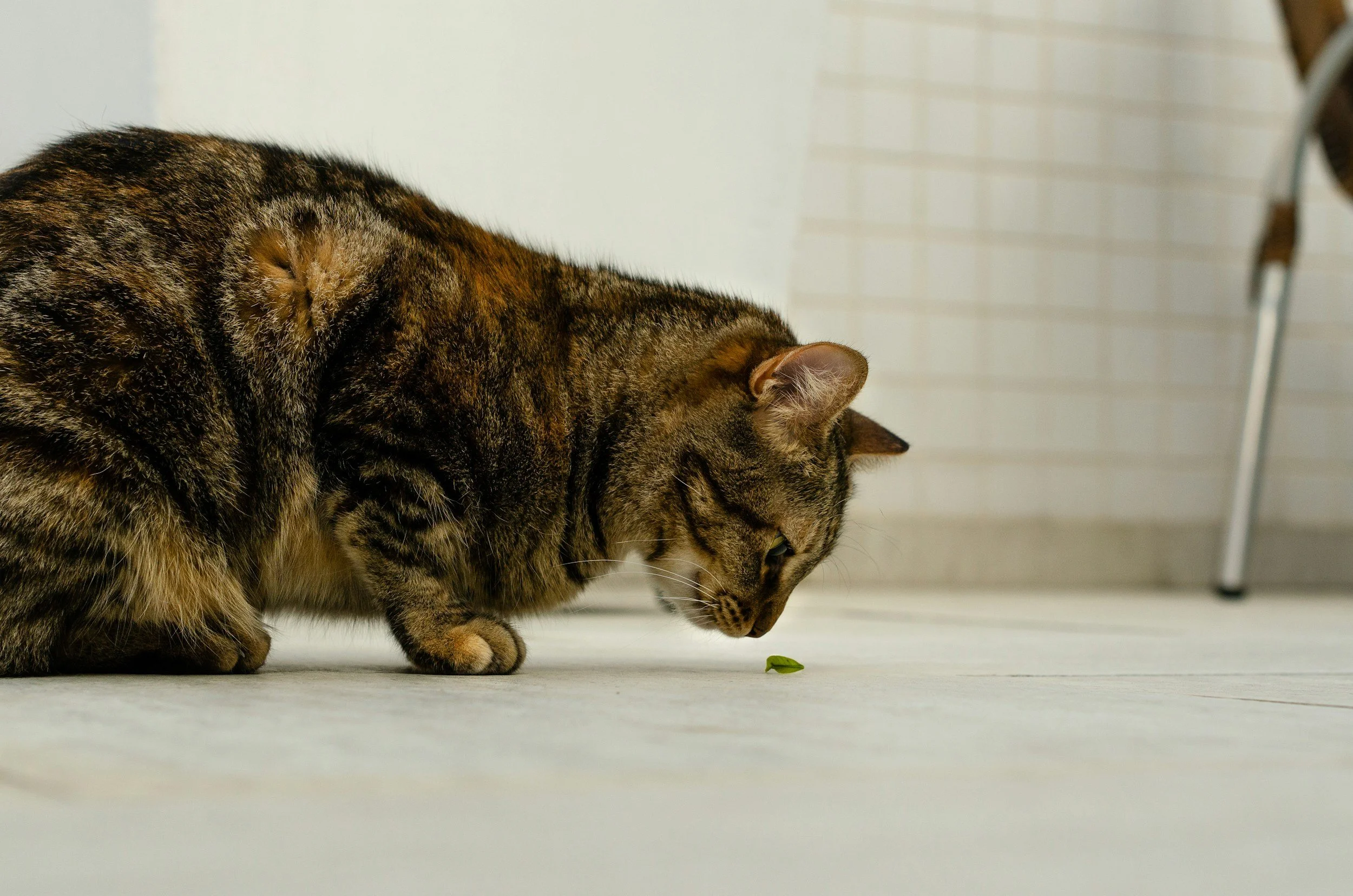
An enrichment guide for Thinker cats in Madison, Fitchburg, Middleton & Verona
If your cat studies a puzzle toy with laser focus before touching it, sits in front of a closed door as though mentally drafting a plan, or watches you from across the room with an expression that seems to say "I'm working something out," you might be living with a Thinker.
Thinker cats are the intellectuals of the feline world. They're observant, detail-oriented, and often a step or two ahead of everyone else in the house. These are the cats who figure out cabinet latches faster than expected, solve food puzzles in minutes, and develop routines they very much expect you to follow. Where Player cats crave motion and Explorer cats crave novelty, Thinker cats crave something quieter: problem-solving, pattern, and the satisfaction of working something out on their own terms.
The goal with a Thinker cat isn't to tire them out. It's to give their brain a genuinely satisfying job. Without that, all that intelligence doesn't switch off. It redirects, sometimes into vocalizing, sometimes into cabinet-opening, and sometimes into a fixation on one particular behavior that suddenly seems very important to your cat and very mysterious to you.
If your cat took the Sploot Enrichment Quiz and landed as a Thinker, this guide is for them.
Is This Your Cat?
Thinker cats don't just see the world. They analyze it. A few signs you're raising one: they observe before acting, studying a new toy or object before engaging with it. They solve puzzle feeders and treat balls quickly, often faster than the packaging promised. Routines matter to them, and they may protest, vocally or behaviorally, when something shifts. They move with control rather than chaos, and they're highly responsive to cues, picking up on hand signals and patterns quickly.
One trait worth naming gently: Thinker cats can come across as "stubborn." If you call your cat and they simply look at you, they're often not ignoring you. They're processing or waiting for the situation to make a bit more sense before committing. These cats are genuinely sensitive to inconsistency and unclear expectations, and what looks like defiance is usually closer to I need a moment to work out what's happening here. Once you see it that way, a Thinker cat becomes a wonderfully rewarding companion to train and engage with.
The flip side: boredom doesn't sit quietly with a Thinker cat. If their mind isn't engaged, they'll find something to engage it, and that something is sometimes the inside of your kitchen cabinets.
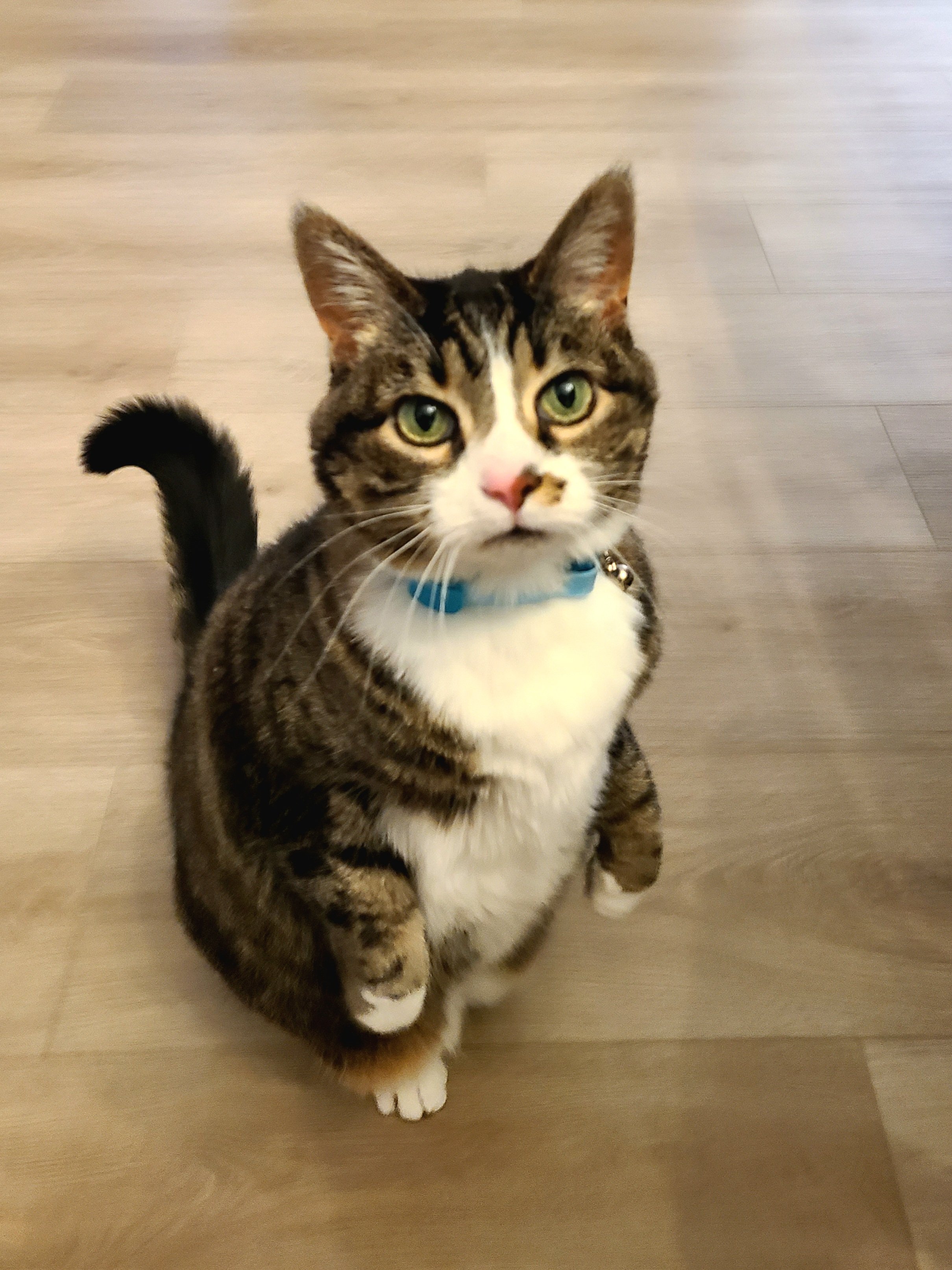
Treat motivated tricks.
Why Mental Enrichment Changes Everything
Cats evolved as both hunters and solo problem-solvers. In the wild, that means hours spent each day locating prey, interpreting scent information, navigating terrain, and working out access challenges. Thinker cats carry that instinctual intelligence indoors, and when there's nowhere for it to go, it tends to surface as frustration, vocalizing, or the kind of fixation that can look like a behavior problem but is really an unmet cognitive need.
The cortisol research that applies across this series matters here too. The 2024 Animals study (Wojtaś et al.) found that cats in enriched environments had nearly half the stress hormone levels of cats in standard ones. For Thinker cats, "enriched" doesn't necessarily mean more toys or more space. It often means more appropriately challenging tasks: things to figure out, patterns to recognize, small wins to collect throughout the day. Engaging a cat's mind in this way supports focus, emotional regulation, and adaptability, the kind of steady confidence that makes a cat less reactive to change.
From a Fear Free perspective, the principle for Thinker cats is success early and often. Cognitive enrichment should be choice-based, frustration-free, and calibrated so your cat wins more than they struggle. A puzzle that's slightly too easy still beats one that's too hard. Confidence, not difficulty, is the goal, and confidence is what lets a Thinker cat's mind actually settle.
Setting Up Your Home for a Thinker Cat
Thinker cats don't need high-energy chaos. They need structure, predictability, and a few well-placed opportunities to "work."
Predictability is the foundation. Consistent routines, stable furniture arrangements, and a generally calm, orderly environment help Thinker cats feel secure enough to engage their minds rather than spend their energy monitoring for change. A home that "makes sense" frees up mental space for play.
Puzzle stations beat puzzle piles. Rather than scattering toys everywhere, designate a couple of spots, maybe near a favorite resting area, as ongoing "workstations." Thinker cats often return to these spots deliberately, the way a person might return to a favorite armchair to read.
Vertical access should be stable, not dramatic. Unlike Explorer cats, who want height for its own sake, Thinker cats prefer wide, stable platforms and predictable step-ups where they can settle in and observe. A cat tree with secure, broad perches near a window works beautifully.
Quiet observation spots are enrichment too. A window perch, a high-backed chair, or a shelf overlooking the main room gives Thinker cats a place to gather information before deciding whether to engage. For this type, watching isn't passive. It's part of how they think.
8 Enrichment Ideas Thinker Cats Love
The shell game. Hide a treat under one of three cups and shuffle slowly at first, increasing difficulty as your cat catches on. This is one of the cleanest cognitive challenges available: simple setup, genuine problem-solving, and an easy way to end on a win. Keep early rounds easy so your cat builds confidence quickly.
Puzzle feeders on rotation. Offer a few different puzzle mechanics, sliding, lifting, rolling, and rotate them every few days so mealtime stays mentally engaging rather than becoming routine. Starting easy matters here too. A frustrated cat at a puzzle feeder learns to avoid it, not to enjoy it.
Treat path mapping. Place treats in a deliberate pattern on the floor, a straight line, a zigzag, a small triangle, and let your cat follow it. Thinker cats genuinely enjoy recognizing and tracking patterns, and this is a low-effort way to give them that experience daily.
Object name training. Teach your cat the names of a couple of toys by saying the name as you present it and rewarding engagement. Many Thinker cats build a surprising vocabulary this way, and the communication dimension is deeply satisfying for cats who are already paying close attention to everything you do.
Target stick training. Teach your cat to touch their nose or paw to a target stick on cue. Thinker cats tend to excel at this kind of step-by-step task, and it's a foundation skill that opens the door to more complex trick chains later.
Barrier puzzle. Place a treat behind an object so your cat has to walk around it rather than straight toward it. This small bit of spatial problem-solving builds frustration tolerance gently, and Thinker cats often approach it with visible deliberation, which is half the fun to watch.
"Find it" scent trail. Drag a treat across the floor to leave a scent trail leading to a hidden reward. This activates scent-tracking and investigative behavior in a structured way, and it's an easy one to set up in a few minutes before you leave for the day.
Step-by-step trick chains. Combine two or three known behaviors into a short sequence, such as sit, touch, then down. Thinker cats love this kind of logical structure, and chains give them something to anticipate and execute with real satisfaction. Start with just two behaviors and build from there.
How Sploot Pet Concierge Supports Thinker Cats
Our in-home cat sitting visits for Thinker cats are built around appropriately challenging engagement, not just toys left on the floor. That means shell games, scent-based "find it" activities, gentle trick training, and puzzle feeders calibrated to your cat's skill level so they stay engaged without getting frustrated. We serve Thinker cats across Fitchburg, Madison, Middleton, and Verona, and we pair each cat with a small, consistent caregiver team who learns their problem-solving style and keeps sessions at the right level of challenge.
For Thinker cats who are also shy or easily overwhelmed, our Fear Free Certified approach leans on predictable patterns, soft verbal cues, and choice-based interaction, rewarding effort and curiosity along the way, not just a perfect outcome.
Ready to Put That Brilliant Mind to Work?
Thinker cats remind us that enrichment doesn't have to be loud or constant. Sometimes the most satisfying ten minutes of a cat's day involve three cups, a treat, and a problem worth solving. If you're ready to book Fear Free Certified care for your Thinker cat in Dane County, we'd love to meet them.
Also explore: The Sploot Enrichment Quiz | In-Home Cat Sitting | Cat Care
