
Companion Cats: That Soft Headbutt Is a Whole Conversation
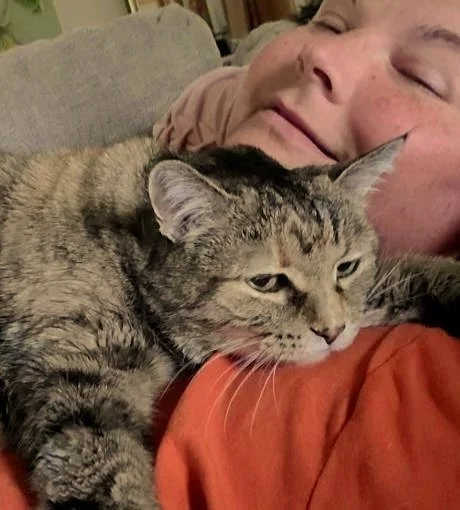
An enrichment guide for Companion cats in Madison, Fitchburg, Middleton & Verona
If your cat settles onto your lap the moment you sit down, follows you from room to room like a quiet shadow, or offers a gentle headbutt that seems to say "you're home, and that matters," you might be living with a Companion.
Companion cats are the heart-forward felines of the world. They seek closeness, connection, and calm, predictable togetherness. These are the cats who nap beside you while you work, sleep near your pillow, or offer a soft chirp when you walk back into the room, not out of distress, but because sharing space with you is genuinely where they want to be. The myth that cats are aloof and self-sufficient simply doesn't hold up for this type. Companion cats form real bonds, and those bonds are central to how they experience the world.
Here's what's easy to miss, though: even the most affectionate, people-oriented cat needs enrichment, not just cuddles, to stay emotionally balanced. Without it, that beautiful closeness can tip toward clinginess, anxious vocalizing, or distress during separations. With the right enrichment, Companion cats become both deeply bonded and quietly confident, able to enjoy your presence and also rest easy when you're not there.
If your cat took the Sploot Enrichment Quiz and landed as a Companion, this guide is for them.
Is This Your Cat?
Companion cats show their affection in soft, consistent ways. A few signs you're raising one: they follow you from room to room, not because they need something, but because they want to be near you. They choose your lap over any cat bed in the house. They offer slow blinks, gentle headbutts, and cheek rubs that feel affection-driven rather than attention-demanding. They settle in during calm activities, reading, working, watching TV, and they're often shy with new people, while completely at ease with you. Proximity itself seems to enrich these cats.
One distinction worth sitting with: there's a real difference between a Companion cat's healthy love of closeness and overdependence. Healthy bonding looks like following you sometimes and resting independently other times, enjoying affection but settling on their own afterward, and seeking comfort without real distress. Overdependence looks like vocal distress when you leave, difficulty resting unless touching you, or stress behaviors like overgrooming and door-scratching during separations. If that second description sounds familiar, it's not a flaw in your cat. It's a sign their enrichment needs a bit more balance, something we'll come back to.
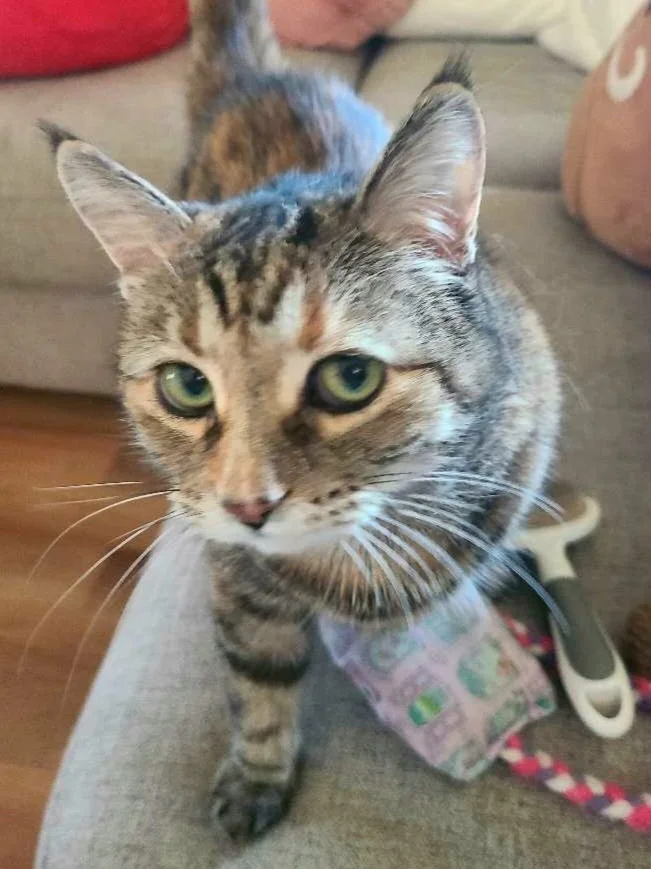
Snuggles and brushing, on their terms.
Why Connection Is Enrichment
The idea that cats are independent loners doesn't match what the research actually shows. Gentle, voluntary interaction between cats and their people, things like soft petting, slow blinking, and quiet proximity, has been associated with lower stress hormones and increased oxytocin, the same hormone involved in human bonding, in both the cat and the person. For Companion cats, who actively seek this kind of interaction out, that means the quiet moments you might think of as "just sitting together" are doing real physiological work.
The cortisol research is relevant here too. The 2024 Animals study (Wojtaś et al.), which found enriched cats had nearly half the cortisol levels of cats in standard environments, didn't measure novelty alone. Social enrichment, predictable routines, and calm interaction were part of what made the difference. For Companion cats specifically, connection isn't separate from enrichment. It's one of its most powerful forms.
From a Fear Free perspective, the key is choice. Companion cats flourish when interaction is optional, soft, predictable, and responsive to their body language. This is what builds the kind of trust that lets a cat feel both bonded and secure, rather than bonded and anxious. The goal isn't fewer connections. It's connection paired with the confidence to be okay on their own, too.
Setting Up Your Home for a Companion Cat
Companion cats don't need a complex environment. They need a warm one, built around shared space rather than separate territory.
Shared resting spots matter more than novelty. A soft bed near your desk, a blanket on the arm of your couch, or a window seat where your cat can settle beside you while you read all give Companion cats what they're actually looking for: your presence, nearby. These cats cherish predictability and warmth far more than new objects or rotated toys.
Emotional safe zones help with the balance. A cozy bed near, but not on, your favorite chair, or a corner with a blanket that carries your scent, gives your cat a retreat that still feels like shared territory. This is part of how "near, not on" becomes a comfortable default rather than a loss.
Predictable movement beats dramatic vertical setups. While Player cats want launch points and Explorer cats want patrol routes, Companion cats do best with gentle steps, low platforms, and calm, soft-lit spaces. The goal is an environment where your cat feels grounded, not one that demands constant engagement.
Routine is itself an enrichment tool. Companion cats regulate best when they can predict the shape of their day: roughly when you'll play, when you'll rest, and when you'll come back. That predictability is quietly one of the most calming things you can offer.
8 Enrichment Ideas Companion Cats Love
Hand targeting ("Touch"). Teach your cat to gently tap their nose to your fingers on cue. It's a small thing, but it gives Companion cats a predictable, cooperative way to interact with you that builds confidence and communication, especially for cats who are shy or easily overwhelmed.
Snuggle, treat, snuggle cycles. Offer a gentle cuddle, a small treat, and a return to quiet affection. Repeating this a few times reinforces relaxed touch and pairs closeness with good feelings. It's especially good for cats who are recovering from a stressful event or who seek frequent reassurance.
Slow wand play. Move a feather wand smoothly and slowly, letting your cat track and pounce without the chaotic energy of fast play. This keeps arousal low while still offering the satisfaction of a gentle hunt, which suits Companion cats far better than high-intensity sessions.
Shared quiet-time ritual. Sit with your cat during reading, a show, or just a quiet moment, ideally in the same spot each time. The predictability of a "usual spot" turns ordinary downtime into a bonding ritual your cat will come to anticipate.
Cooperative puzzle solving. Instead of placing a puzzle toy down and walking away, sit with your cat and gently guide them through it, pointing, narrating softly, and celebrating each small win. Companion cats engage with problem-solving very differently when it's something done together.
Gentle grooming with consent. Offer the brush and wait for your cat to lean in before you begin. Stop when they look away or shift. This consent-based approach turns grooming from a task into a trust-building ritual, and it's one of the clearest ways to deepen a Companion cat's sense of safety with you.
"Near, not on" mat training. Teach your cat to settle on a soft mat near where you're sitting, rewarding calm settling with quiet praise. This is one of the most valuable enrichment investments for Companion cats: it builds the skill of being close without needing to be in constant physical contact, which supports both connection and independence.
Heart-to-heart quiet moments. Sometimes the enrichment is simply sitting together in silence, offering slow blinks and a calm presence. For Companion cats, this isn't a lack of activity. It's the activity. Genuine, unhurried presence is core enrichment for this type in a way that's easy to underestimate.
How Sploot Pet Concierge Supports Companion Cats
Our in-home cat sitting visits for Companion cats are built around calm, attuned connection rather than a rushed check-in. That means soft petting with consent, slow-blink bonding, gentle wand play, and quiet companionship near your cat's favorite resting spot. We serve Companion cats across Fitchburg, Madison, Middleton, and Verona, and we pair each cat with a small, consistent caregiver team who learns their routines, their comfort cues, and the small rituals that help them feel secure.
For Companion cats who experience real distress during separations, our visits focus on predictable timing, calm transitions, and the kind of steady presence that helps build confidence over time. Our Fear Free Certified approach never rushes a cat toward independence. It builds the trust that makes independence feel safe.
Ready to Nurture That Connection?
Companion cats remind us that love doesn't have to be loud or complicated. A slow blink, a quiet lap session, and a predictable routine can do more for a cat's emotional well-being than almost anything else. If you're ready to book Fear Free Certified care for your Companion cat in Dane County, we'd love to meet them.
Also explore: The Sploot Enrichment Quiz | In-Home Cat Sitting | Cat Care
