
Forager Birds: That Shredded Newspaper Is Actually a Job Well Done
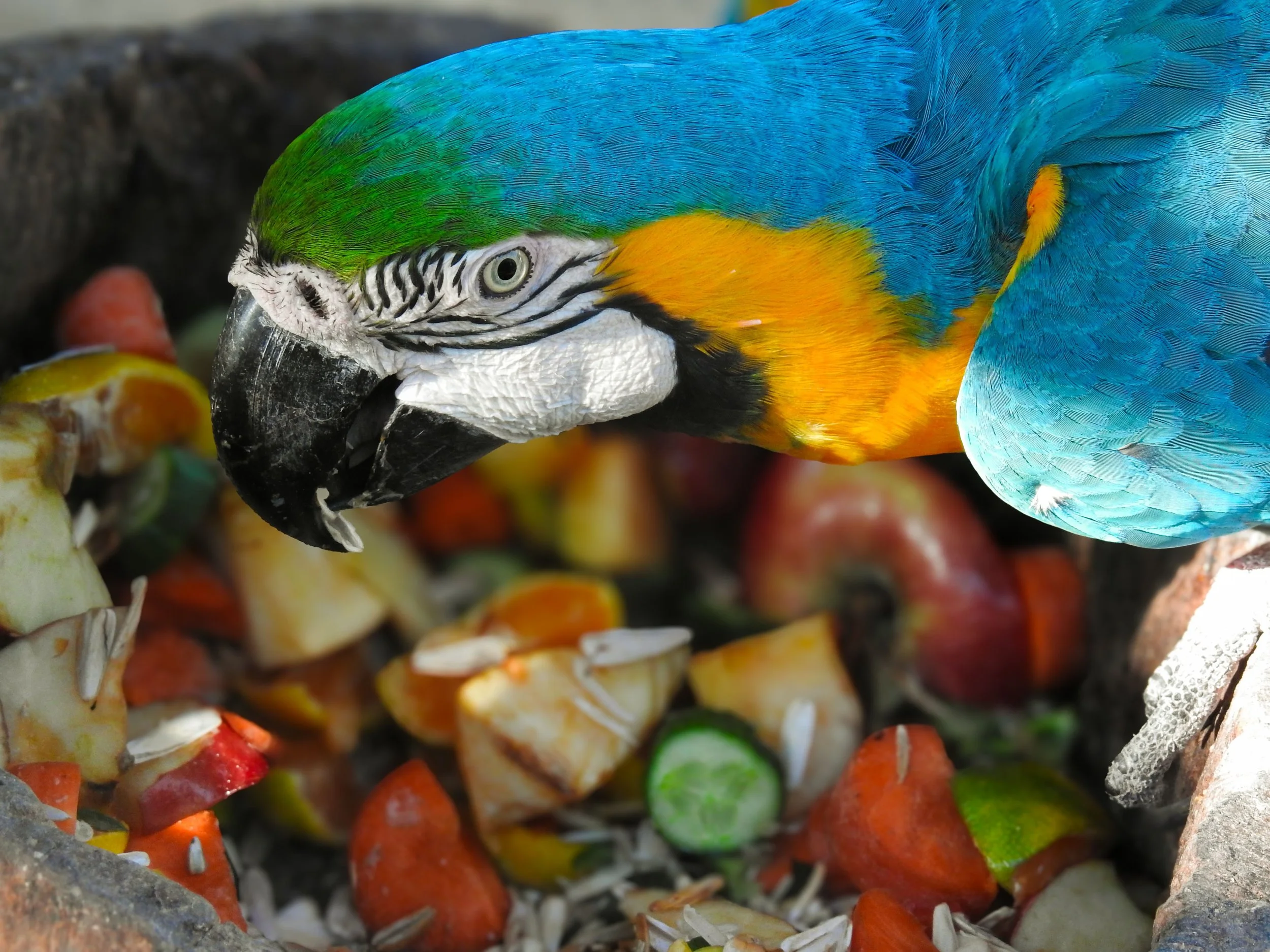
An enrichment guide for Forager parrots, cockatiels, and budgies in Madison, Fitchburg, Middleton & Verona
If your parrot examines every new object with their beak before anything else, your cockatiel would rather shred a piece of paper than sit still, or your budgie investigates a small cup with real focus the moment it appears, you might be caring for a Forager.
Forager-type birds are the curious problem-solvers of the avian world. In the wild, parrots and parakeets spend a significant portion of their day searching for food: locating it, peeling bark, opening seed pods, and manipulating objects with their feet and beak just to get to a meal. That drive doesn't disappear indoors. It just runs out of places to go, unless we give it somewhere safe to land.
A bird who receives a full bowl with no effort required has, in a real sense, nothing left to do with that part of their brain. For Forager-type birds especially, that gap tends to get filled with shredding furniture, excess vocalizing, or feather-related behaviors that look like a problem but are really an unmet need for "work."
If your bird took the Sploot Enrichment Quiz and landed as a Forager, this guide is for them.
Is This Your Bird?
Forager-type birds share a few clear patterns across species. They investigate new objects beak-first, before anything else. They have a strong shredding instinct; paper, cardboard, soft wood, and palm leaf are all fair game. They approach puzzles with focus rather than hesitation, and they clearly prefer working for food over an open bowl. They're persistent, returning to a puzzle until they solve it, and they notice small changes immediately. Move a toy an inch, and a Forager bird will inspect it.
Species-specific tells are worth knowing, too. Parrots tend to actively dismantle toys, seek out multi-step puzzles, and use both beak and feet to manipulate objects. Cockatiels love shredding thin materials like paper and enjoy exploring hidden food bundles, often with a gentler touch than larger parrots. Budgies show strong interest in small cups and paper strips, investigate frequently in short bursts, and pick up simple "lift the lid" tasks quickly.
If your bird lights up at the sight of something to shred, solve, or investigate, that's not mischief. That's a Forager telling you exactly what they need.
Why Foraging Is a Core Behavioral Need
Foraging isn't a bonus activity for birds. It's one of the behaviors that defines their well-being. Research consistently shows that captive parrots given foraging opportunities exhibit lower rates of feather-damaging behavior and better overall feather condition than birds without such outlets.
A study by Meehan, Millam, and Mench (2003), published in Applied Animal Behaviour Science, found that young Amazon parrots given foraging opportunities and a more physically complex environment showed reduced psychogenic feather picking compared to parrots in standard setups. A separate study by Lumeij and Hommers (2008), also in Applied Animal Behaviour Science, used a crossover design with 18 African grey parrots and found that birds given food in pipe feeders, rather than a bowl, showed significantly improved foraging time and feather scores.
There's also a well-documented phenomenon called contrafreeloading. Research by van Zeeland and colleagues (2009) found that healthy grey parrots obtained 40 to 50 percent of their diet through contrafreeloading, choosing to work for food via a foraging device even when identical food was freely available nearby. The act of foraging itself appears to be reinforcing, not just the food at the end of it.
From a Fear Free perspective, the key principle for Forager birds is that foraging should always be optional, achievable, and rewarding, never a test. A bird who succeeds easily and often will keep engaging. A bird who hits a wall of difficulty too soon may disengage entirely or redirect that frustration elsewhere. Starting simple and increasing difficulty in small steps isn't just kind. It's what makes the enrichment actually work.
Setting Up Your Home for a Forager
Each of these species forages a little differently, so their environments benefit from setups tailored to size, beak strength, and confidence level.
Parrots do well with a dedicated shredding zone using sturdier materials like balsa, cork, and palm leaf, along with multi-step puzzles placed at different heights to encourage both foraging and natural climbing behavior. Larger beaks need tougher textures to stay satisfied.
Cockatiels thrive with softer materials, paper rolls, thin cardboard, and gentle shredders, set up in simple, uncluttered configurations. Hidden food bundles that don't require much strength to open work especially well for this species.
Budgies need very lightweight, small-scale setups: tiny cups, paper strips, and seed-foraging mats they can manipulate without strain. Frequent, brief foraging opportunities throughout the day suit this species better than one big setup.
Across all three, a stable overall layout with only one or two small changes per week keeps novelty exciting rather than overwhelming. Small, consistent change builds curiosity. Big, frequent change tends to build stress.
8 Enrichment Ideas Forager Birds Love
Beginner forage cups. Hide a small treat under a lightweight cup or inside a shallow container. This is a genuinely low-pressure puzzle that builds early confidence. For parrots, use sturdier cups that they can flip or lift. For cockatiels, clear or translucent cups help prevent frustration by letting them see the goal. For budgies, start with very shallow cups or lids.
Shreddable destroy bin. Fill a small bin with safe paper strips, tissue, and thin cardboard, materials that your bird is fully welcome to demolish. This channels natural shredding and nest-building instincts toward something appropriate. Parrots can have balsa or cork chunks mixed in for extra texture. Cockatiels do best with thin, easy-to-rip materials. Budgies need very lightweight paper that they can manage comfortably.
Paper roll snack tubes. Stuff a paper towel or toilet paper tube with paper, herbs, or pellets, and fold the ends loosely. Your bird has to shred, pull, and manipulate to reach the reward, which builds both beak strength and problem-solving confidence. Parrots can handle extra folds for added difficulty. Cockatiels do better with ends left more open. Budgies need smaller tubes sized to toilet-paper-roll dimensions.
Forage branch station. Attach safe branches with crevices stuffed with treats or paper. This mimics natural foraging on bark and encourages climbing alongside beak exploration. Parrots benefit from thicker branches with varied textures. Cockatiels prefer horizontal perching access. Budgies need thin branches they can grip confidently.
Hidden drawer boxes. Small cardboard or untreated wood boxes with easy-to-open flaps give birds something to discover. The act of opening and pulling is itself rewarding. Parrots can have multiple compartments for added complexity. Cockatiels do best with shallow drawers. Budgies do best with a single compartment to avoid overwhelm.
Ladder foraging. Place small treats or paper bundles along the rungs of a ladder or rope perch, combining foraging with climbing. Parrots can use vertical and diagonal ladders for variety. Cockatiels prefer gentler inclines. For budgies, keep spacing close so they're never overstretched.
Veggie kabobs. Thread bird-safe vegetables or greens onto a stainless steel skewer. Your bird has to pull, peel, and manipulate to get to the food, which makes mealtime itself a foraging activity. Parrots do well with harder veggies like carrots or squash. Cockatiels prefer leafy greens or softer vegetables. Budgies need tiny pieces and thin slices.
Weekly puzzle rotation. Cycle through a small set of puzzles, cups, paper rolls, and hanging baskets, on a weekly basis. Predictable novelty keeps Forager birds mentally engaged without tipping into stress. Parrots can handle more complex, multi-step rotations over time. Cockatiels do well with simple but varied textures. Budgies need lightweight, low-frustration options in rotation.
How Sploot Pet Concierge Supports Forager Birds
Our in-home bird sitting visits for Forager-type birds are built around safe, structured "work" for the beak and mind. That might mean simple forage cups and hidden treats, shreddable paper or palm leaf materials, puzzle feeder rotation, or veggie kabobs, all introduced at a pace that builds confidence rather than frustration. We serve Forager birds across Fitchburg, Madison, Middleton, and Verona, and we pair each bird with a small, consistent caregiver team who learns their preferred puzzle types and difficulty level.
Our Fear Free Certified approach means foraging is always optional and calibrated to your bird's comfort. We watch for signs that a puzzle is too hard, simplify when needed, and make sure every session includes an easy win, because a busy beak and a calm bird go hand in hand.
Ready to Put That Curious Mind to Work?
Forager-type birds remind us that shredding, peeling, and problem-solving aren't bad behavior. They're brilliance looking for somewhere to go. A consistent routine of safe, achievable challenges can make a real difference in how settled and content your bird feels. If you're ready to book Fear Free Certified care for your Forager in Dane County, we'd love to meet them.
Also explore: The Sploot Enrichment Quiz | In-Home Bird Sitting | Bird Care
