
Navigator Birds: Those "Cage Laps" Are a Request, Not a Quirk
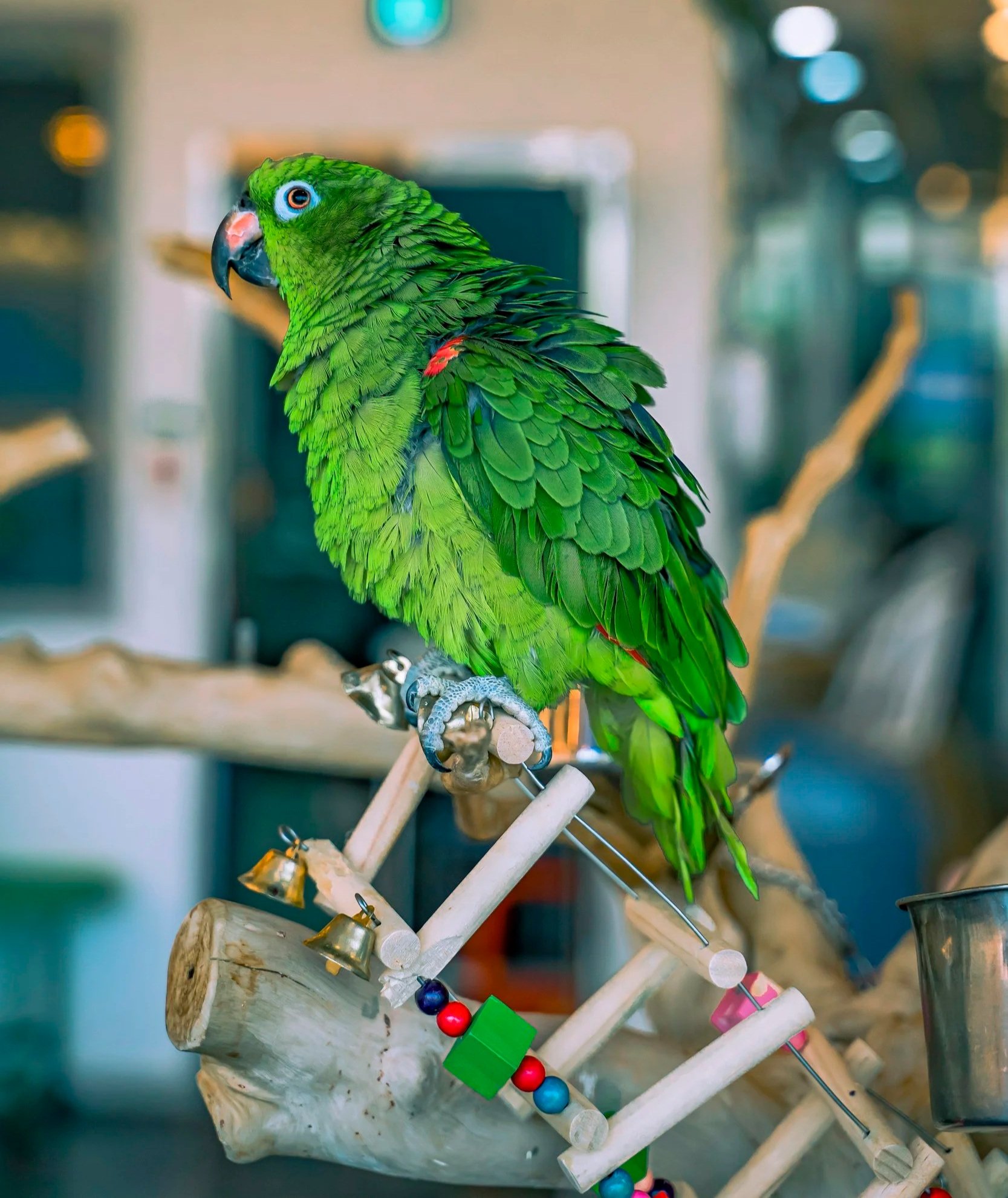
An enrichment guide for Navigator parrots, cockatiels, and budgies in Madison, Fitchburg, Middleton & Verona
If your parrot zigzags across the room with real purpose, your cockatiel glides confidently between perches like it's mapping out a route, or your budgie hops from spot to spot in quick, constant bursts, you might be caring for a Navigator.
Navigator-type birds are the movers, climbers, and explorers of the avian world. They're driven by spatial awareness and environmental mapping, the same instincts that, in the wild, help parrots and parakeets navigate tree canopies, climb branches, and fly short distances between food sources dozens or even hundreds of times a day. Movement, for these birds, isn't an extra activity layered on top of everything else. It's how they process their world and regulate themselves.
When that need goes unmet, it doesn't just disappear quietly. It tends to show up as pacing, repetitive hopping, or what many owners describe as "cage laps," a bird moving back and forth along the same short path again and again. That's not a quirk to manage around. It's a Navigator telling you they need more places to go.
If your bird took the Sploot Enrichment Quiz and landed as a Navigator, this guide is for them.
Is This Your Bird?
Navigator-type birds share a recognizable set of behaviors across species. They're constantly mapping their environment, checking perches, surfaces, corners, and heights as they move through their space. They hop or take short flights frequently, even in small areas, and they show real enthusiasm for climbing, ropes, ladders, nets, anything with a route to follow. They're drawn to varied heights, often choosing the highest safe point available, and they tend to fly or climb before settling down to rest, almost like they need to move first in order to relax. When understimulated, that need for movement can turn into repetitive pacing or hopping with no clear destination.
Species-specific patterns are worth noting, too. Parrots use both beak and feet to climb in coordinated ways and are drawn to boings, hanging ropes, and multi-level structures. Cockatiels tend to glide gently between perches or low shelves, favoring horizontal movement over a lot of vertical climbing. Budgies are quick, dart-like flyers who do near-constant micro-hopping between perches and readily take to tiny ladders and lightweight climbing toys.
If your bird seems happiest "on the move," constantly checking out their world from a slightly different angle, that's a Navigator showing you exactly what keeps them balanced.
Why Movement Is a Biological Need, Not a Bonus
Movement isn't optional for birds. It's part of their biology. In the wild, parrots, cockatiels, and budgies fly dozens to hundreds of short bursts a day as they forage, avoid predators, and navigate their territory, and that movement supports everything from cardiovascular health to natural wing and tail use to genuine stress reduction.
A study by Assis and colleagues (2016), published in the Arquivo Brasileiro de Medicina Veterinária e Zootecnia, looked at cockatiels housed with and without physical enrichment, wooden sticks and bead rings added to their environment, and found that enrichment meaningfully shifted behavior across categories, including locomotion. Birds with a more complex physical environment simply moved differently, and more, than birds without it.
This matters because Navigator birds aren't just active for activity's sake. They're strategic. They plan routes, test surfaces, problem-solve around obstacles, and memorize spatial layouts, combining physical movement with real cognitive work. From a Fear Free perspective, the key principles for Navigator enrichment are that movement should always be safe, gradual, and choice-based. Never forced flight, never sudden height increases, always small wins that build confidence to explore a little further next time.
Setting Up Your Home for a Navigator
Each species moves through its world a little differently, so their environments benefit from setups tailored to their natural movement style.
Parrots do well with larger, sturdier climbing structures, ropes, boings, and ladders at varied heights, along with indoor "flight lanes" of four to eight feet where short, safe glides between stands are possible. More height variety supports their strong climbing instincts.
Cockatiels thrive with gentle incline climbing, wide and stable perches, and low to moderate glide paths between perches rather than steep vertical challenges. Light, gently-moving swings suit this species well.
Budgies need narrow perches, tiny ladders, and lightweight movement toys placed close together, supporting the frequent micro-hops and short flights that define how this species moves. Frequent small opportunities matter more than one big setup.
Across all three, a stable overall cage layout with clear routes, no dead ends, and no overly cluttered flight paths gives Navigator birds the predictable map they rely on, while small, occasional additions keep things interesting without creating fear.
8 Enrichment Ideas Navigator Birds Love
Ladder and rope climb circuit. Create a small climbing route using ladders, braided rope, and secure perches arranged as a path. Navigators genuinely love having a route to follow, and this builds coordination and confidence together. Parrots can handle vertical and diagonal sections. Cockatiels do best with gentler incline ladders. Budgies need tiny rungs and lightweight rope for easy grip.
Short flight or glide lane. Set up two stable perches or stands several feet apart for safe mini-flights. This mirrors how birds travel between branches in the wild and supports both cardiovascular health and confidence. Parrots can manage four-to eight-foot indoor glides. Cockatiels do best with low, gentle glide paths. Budgies respond well to very short, frequent hops rather than longer distances.
Swing and boing station. Add one or two swings, or a rope "boing," for safe, rhythmic movement that challenges balance and footwork. Parrots need sturdy, well-secured swings. Cockatiels enjoy lighter swings that move gently. Budgies do best with small swings and tight-grip perches.
Exploration wall. Hang safe items, ropes, soft toys, paper fans, seagrass mats, at varied heights to encourage climbing and side-stepping investigation. Parrots can handle heavier, more varied textures. Cockatiels prefer softer, lightweight wall items. Budgies do well with tiny, lightweight mats and mini-ropes.
Perch maze pathway. Arrange perches of different lengths, angles, and heights into a "route" your bird can navigate. This engages spatial planning alongside controlled climbing. Parrots benefit from curves and varied widths. Cockatiels prefer wide, stable perches throughout. Budgies do best with narrow perches placed close together.
Window watching perch. Set up a stable perch near a window where your bird can safely observe outdoor activity. Visual scanning is part of natural territory mapping, and this provides mental stimulation without overstimulation. Parrots can use thick, stable branches. Cockatiels benefit from a slightly lower perch to prevent startle. Budgies need a perch with a strong grip surface.
Hallway runway game. Place a series of small perches or stepping points down a hallway or across a room, turning movement into a goal-oriented activity. Parrots can use larger, more spaced-out perches. Cockatiels do well with moderate spacing for safe glides. Budgies need very small, close-together stations.
Climbing gym with a foraging tie-in. Combine a climbing path with a small reward at the end, pairing two natural motivations: navigating and discovery. Parrots can handle multi-step paths. For cockatiels, keep it simple, two or three steps at most. Budgies do well with tiny perches and micro-rewards along the way.
How Sploot Pet Concierge Supports Navigator Birds
Our in-home bird sitting visits for Navigator-type birds are built around safe, choice-based movement. That might mean supervised out-of-cage time with climbing circuits, gentle glide opportunities in a secure space, thoughtfully placed perch rotations, or quiet window-perch time for environmental mapping. We serve Navigator birds across Fitchburg, Madison, Middleton, and Verona, and we pair each bird with a small, consistent caregiver team who learns their preferred routes and movement style.
Our Fear Free Certified approach means we never push a bird toward flight or a higher perch before they're ready. New movement options are introduced slowly, with close attention to body language, because for Navigator birds, confidence and movement build each other.
Ready to Help That Curious Mover Explore?
Navigator-type birds remind us that climbing, gliding, and hopping aren't restlessness to manage. These are how these birds think, regulate, and feel at home in their space. A few thoughtfully placed perches and a clear route can make a real difference. If you're ready to book Fear Free Certified care for your Navigator in Dane County, we'd love to meet them.
Also explore: The Sploot Enrichment Quiz | In-Home Bird Sitting | Bird Care
