
Performer Birds: That Whistle Back Is the Whole Point
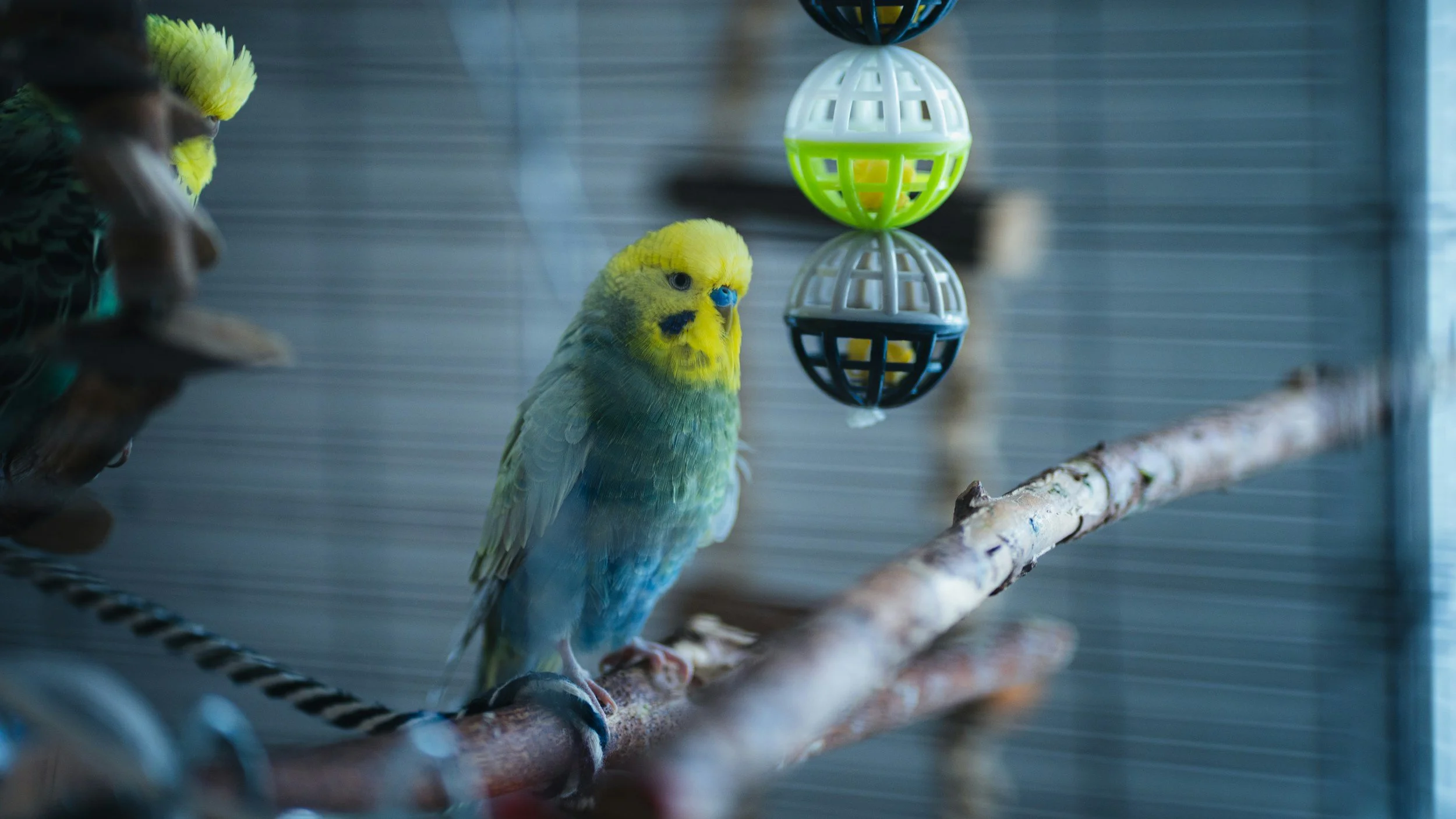
An enrichment guide for Performer parrots, cockatiels, and budgies in Madison, Fitchburg, Middleton & Verona
If your cockatiel whistles back the moment you whistle first, your parrot waves on cue and watches for your reaction, or your budgie practices new sounds when they think no one's listening, you might be caring for a Performer.
Performer-type birds are the expressive communicators of the avian world. They sing, dance, mimic, and interact their way through the day, not to control the room, but to connect with it. In the wild, birds sing and call to coordinate with their flock, mimic environmental sounds, and use vocalizations to maintain bonds with their flock mates. A Performer-type bird brings all of that instinct indoors, and a household with people in it becomes their flock.
These birds aren't "loud" so much as they're communicating, often quite literally asking to be acknowledged. When that communication is met with structured, positive engagement, Performer birds settle into some of the most joyful personalities a home can have. When it isn't, the same drive can turn into screaming, frustration, or attention-seeking behavior that's really just an unmet need for connection, dressed up louder.
If your bird took the Sploot Enrichment Quiz and landed as a Performer, this guide is for them.
Is This Your Bird?
Performer-type birds share a recognizable set of behaviors across species. They're vocal for attention, whistling, chattering, or calling out when you enter a room. They're call-and-response naturals, mimicking your whistles or "talking back" to sounds. They express themselves through movement too, head-bobs, dancing, leaning in for interaction, and rhythmic swaying. They brighten and vocalize when spoken to, gravitate toward toys that respond with sound or feedback, and quickly and enthusiastically pick up simple tricks, like wave or step-up variations. Importantly, they seek engagement throughout the day. They don't just tolerate attention. They invite it.
Species-specific patterns are worth knowing too. Parrots often practice new sounds when alone, display visible "shows" of excitement, and thrive with daily social sessions and more complex trick training. Cockatiels are famous for whistling tunes and rhythmic head-bobbing or dancing, and they're highly responsive to interactive whistling games. Budgies are rapid chatterers and skilled mimics who use "flock calling" to check where you are, and they respond enthusiastically to simple tricks and movement-based toys.
If your bird sings for you, dances with you, or clearly has a lot to say, that's a Performer telling you exactly how they want to connect.
Why Interactive Enrichment Is the Core Need
Performer-type birds lean heavily on social cognition, one of the most well-documented aspects of avian intelligence. The research of Irene Pepperberg, conducted over several decades with an African grey parrot named Alex, demonstrated that parrots are capable of genuine concept formation, label use, and two-way communication, not just rote mimicry. That body of work fundamentally changed how science understands parrot cognition, and it underlies why interaction matters so much for this type. These birds aren't just making noise. They're engaging in something much closer to conversation.
A 2025 study by Aguiar, Châline, and de Azevedo, published in Applied Animal Behaviour Science, compared object-based and food-based enrichment in captive cockatiels and found that object-based items elicited significantly more interaction than food-based enrichment. For Performer-type birds, this lines up with what owners already sense: these birds aren't just looking for something to do. They're looking for something to engage with, ideally something that responds back.
From a Fear Free perspective, the most important principle for Performer birds is this: never punish vocalization, and never reinforce screaming with attention, but do reinforce the communication you want to see more of. Short, predictable, positive interactions throughout the day, rather than occasional long ones, are what actually meet this type's social needs without tipping into overstimulation.
Setting Up Your Home for a Performer
Each species expresses its social drive a little differently, so their environments benefit from setups that support interaction without overwhelming them.
Parrots do well with a perch in a socially active part of the home where they can see and hear household activity, along with robust noise-feedback toys, stainless steel bells, chimes, and sturdy interactive pieces, and a consistent spot for short daily trick-training sessions.
Cockatiels thrive with gentle sound toys, lightweight chimes, and soft crinkle textures, paired with melodic call-and-response routines. A low, secure platform for head-bob "dance" sessions works particularly well for this species.
Budgies need lightweight toys, tiny bells, and simple rhythmic environments, along with frequent, very brief interactions throughout the day rather than longer, less frequent ones. Micro-training sessions of ten to twenty seconds suit this species best.
Across all three, balance matters. Performer birds genuinely love sound and interaction, but they can become overstimulated. Quiet periods between engagement and avoiding constant loud media or chaotic background noise help keep their nervous systems regulated.
8 Enrichment Ideas Performer Birds Love
Call-and-response whistle games. Whistle a simple tune or pattern and wait for your bird to respond, then repeat with small variations. This is one of the most directly satisfying activities for Performer birds, since being acknowledged vocally is exactly what they're seeking. Parrots often pick up multi-note patterns quickly. Cockatiels are naturals for whistling duets. Budgies do well with rapid, high-pitched exchanges.
Rhythm and dance sessions. Play soft music or clap gently to create a rhythm your bird can sway or bob along to. Rhythm taps into natural social display behaviors and encourages confident movement. Parrots often enjoy varied rhythms and slower beats. Cockatiels are perfect candidates for head-bob dance routines. Budgies tend to prefer a soft, upbeat tempo.
Trick training with tiny steps. Use small treats to train simple gestures, a wave, a spin, a step-up variation, that your bird can "perform." This builds confidence and communication while giving Performers exactly the structured attention they crave. Parrots often learn trick chains easily. With cockatiels, start with a wave or spin. Budgies do best with very tiny steps and short sessions.
Talking and mimic practice. Spend a few minutes repeating words, whistles, or short sounds together. Vocal learning activates social and cognitive pathways and gives Performers a healthy outlet for their natural mimicry. Parrots tend to do best with word and sound mimicry. Cockatiels generally prefer whistling over words. Budgies can mimic speech surprisingly well in short bursts.
Interactive sound toys. Offer bells, chimes, gentle rattles, or crinkly toys that respond to your bird's actions with sound. Performer birds love toys that "respond" the way a flock member might. For parrots, choose durable stainless steel bells only. Cockatiels do well with lightweight chimes or soft crinkly toys. Budgies need tiny, very light bells and toys.
"Show us your moves" platform. Set up a stable perch or small platform where your bird has a consistent spot to perform tricks or dances. Having a defined "stage" creates consistency for training and expressive enrichment alike. Parrots can use a sturdy tabletop perch. Cockatiels do well with a low, secure platform. Budgies need a smaller perch with a good grip.
Good morning, good night ritual. Build a simple daily ritual, a greeting, a whistle, a quick trick, that happens at roughly the same times each day. Performer birds genuinely crave these predictable social touchpoints, and the routine itself reduces screaming by giving them something reliable to anticipate. Parrots often enjoy more elaborate greeting routines. For cockatiels, keep it short and melodic. For budgies, simple and cheerful works best.
The conversation zone. Set aside time to simply sit, talk to your bird, and let them vocalize freely in response. Performer birds want to be part of the conversation, quite literally, and this kind of unstructured but attentive time meets that need directly. Parrots do well with structured speech or sound practice here. Cockatiels bond strongly through this kind of vocal exchange. Budgies thrive on cheerful, frequent chatter.
How Sploot Pet Concierge Supports Performer Birds
Our in-home bird sitting visits for Performer-type birds are built around short, structured, positive social engagement. That might mean call-and-response whistle play, gentle trick-training moments, melodic chat time, or quiet companionship that still acknowledges your bird's vocalizations in a healthy way. We serve Performer birds across Fitchburg, Madison, Middleton, and Verona, and we pair each bird with a small, consistent caregiver team who learns their particular sounds, routines, and favorite call-and-response games.
Our Fear Free Certified approach means we never reinforce screaming with attention, but we do make sure your bird's desire to communicate is met, just in calmer, more predictable ways. Performer birds get to be exactly as expressive as they are, with the structure that helps that expression feel good rather than frantic.
Ready to Join the Conversation?
Performer-type birds remind us that a whistle back, a little dance, or a word repeated just right isn't showing off. It's connection, offered in the only language these birds have. A few minutes of real engagement, given consistently, goes a long way. If you're ready to book Fear Free Certified care for your Performer in Dane County, we'd love to meet them.
Also explore: The Sploot Enrichment Quiz | In-Home Bird Sitting | Bird Care
