
Bonding Birds: To Your Bird, You Are the Flock
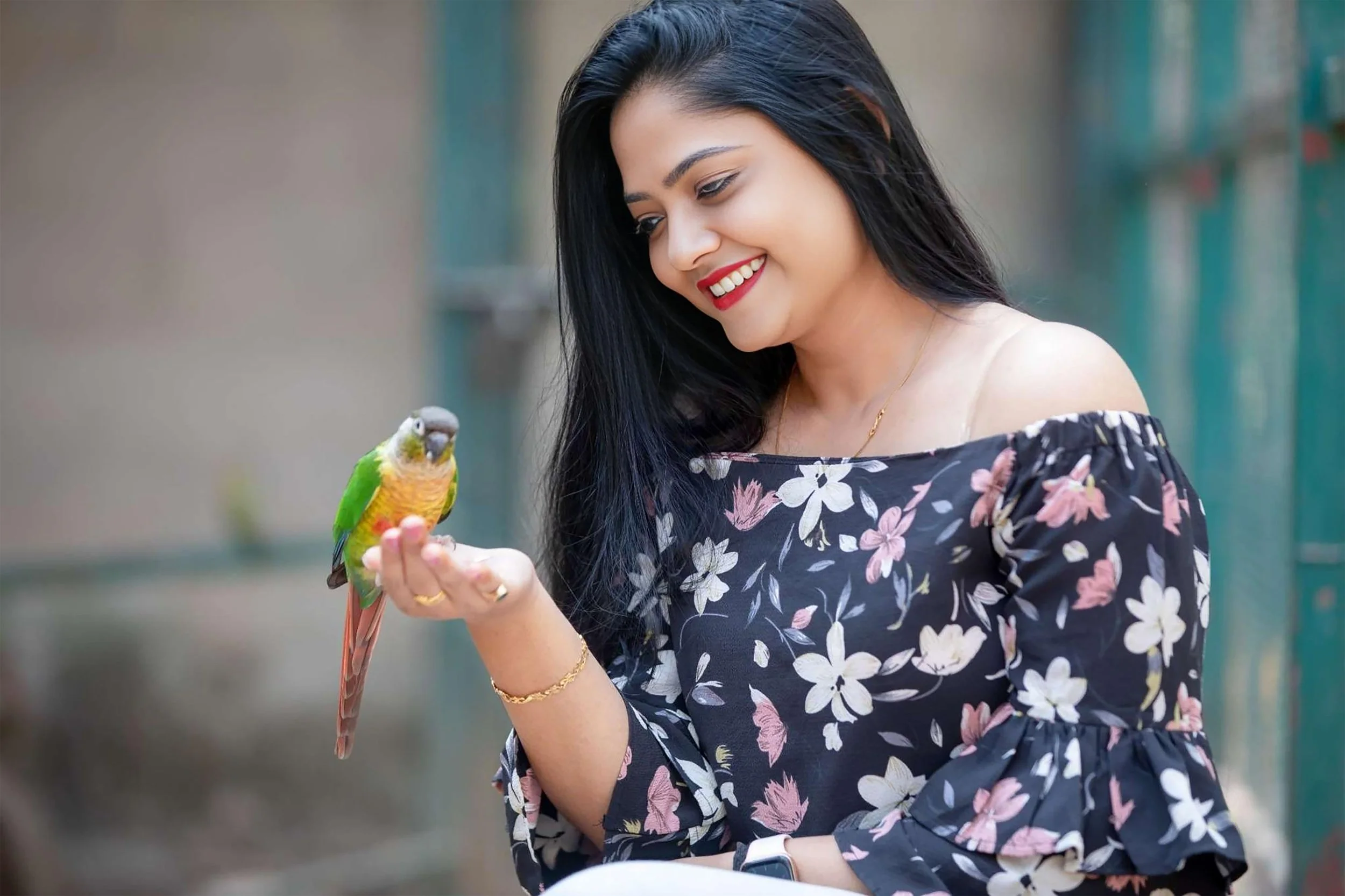
An enrichment guide for Bonding parrots, cockatiels, and budgies in Madison, Fitchburg, Middleton & Verona
If your cockatiel insists on sitting on your shoulder, your budgie follows you from perch to perch around the room, or your parrot softly preens your hair or sleeve while you sit together, you might be caring for a Bonding bird.
Bonding-type birds are the heart birds of the avian world. They form deep emotional connections and feel safest when they're close to their flock, and in a home, that flock is you. This isn't clinginess. It's an instinct that runs deep in nearly all parrot species: the need for flock cohesion, pair bonding, and secure social connection. In the wild, staying close to flock members is how birds stay safe, communicate, groom, and learn. A Bonding-type bird brings that same instinct indoors, and it shows up as wanting to be near you, checking in with soft calls, and relaxing more easily when they can see or hear you.
The goal with a Bonding bird isn't to provide constant contact. It's to offer predictable, calm, connection-based moments throughout the day, the kind that build genuine trust and emotional security, while also gently supporting the independence that keeps connection from tipping into overattachment or separation distress.
If your bird took the Sploot Enrichment Quiz and landed as a Bonding bird, this guide is for them.
Is This Your Bird?
Bonding-type birds show affection in subtle, consistent ways. A few shared signs across species: they prefer to be near you, not necessarily on you, but within sight or earshot. They follow you around the room, hopping from perch to perch to stay close. They offer soft contact calls, gentle chirps, whistles, or murmurs that function as a "checking in." They lean into scritches or touch when offered, and they may preen your hair, clothing, or fingers, a pair-bond behavior transferred to their trusted human. Their body language relaxes in your presence, fluffed feathers, half-closed eyes, settling in. And they tend to be deeply routine-oriented, with morning greetings and bedtime rituals mattering more than people might expect.
Species-specific patterns are worth knowing, too. Parrots often engage in mutual preening at the shoulder, hair, or beard, seek predictable calm interaction, and tend to choose one favorite person to stay close to. Cockatiels nuzzle faces, ears, or hair, prefer soft talking and light scritches, and are especially sensitive to being separated from their flock. Budgies chirp-duet with you, preen your hand or sleeve, and follow your movement with eager curiosity.
If your bird's happiness seems closely tied to companionship, especially quiet, calm togetherness rather than big interactive play, that's a Bonding bird telling you what they need most.
Why Social Connection Is a Biological Need
Parrots, cockatiels, and budgies are flock-based species, and that's not a minor detail. In the wild, safety, communication, grooming, and learning all happen through social bonding, and many parrots form long-term or monogamous pair bonds involving mutual preening, shared perches, and soft contact calls to maintain closeness. Bonding-type birds often transfer some of this instinct directly to their trusted humans.
The flip side is well documented, too. Research by Meehan, Millam, and Mench (2003), along with earlier work by van Hoek and ten Cate (1998), found that parrots lacking appropriate social interaction are more likely to develop screaming, feather-plucking, anxiety, and repetitive behaviors. Social connection for these species isn't a nice extra. Its absence is directly linked to some of the most common behavioral concerns parrot owners face.
From a Fear Free perspective, the key principle for Bonding birds is that connection must always be choice-based, never forced, and balanced with gentle independence. A bird who chooses closeness and also rests comfortably on their own is genuinely secure. A bird who can only settle with constant contact may be telling you that the connection has tipped into dependency, something we'll come back to.
Setting Up Your Home for a Bonding Bird
Each species expresses the need for connection a little differently, so their environments benefit from setups that allow closeness without creating overdependence.
Parrots do well with a perch positioned near where you spend time, paired with structured daily connection moments and equally structured independent time, foraging or a quiet chew item, to prevent the kind of intense pair-bond attachment that can make separations harder.
Cockatiels thrive with gentle, predictable routines: a perch within sight of your usual spot, soft talking or whistling at consistent times, and calm, low-stimulation surroundings. This species is especially sensitive to flock separation, so consistency matters more than novelty here.
Budgies benefit from frequent, brief micro-interactions throughout the day rather than long sessions, plus inclusion in the general "flock flow" of the household, a perch where they can watch and chirp along with daily life.
Across all three, a dedicated "connection corner," a soft perch, calm lighting, and quiet toys give Bonding birds a predictable, low-arousal space for quiet togetherness, while hides or quiet retreats nearby support the independent rest that keeps bonding healthy.
8 Enrichment Ideas Bonding Birds Love
Near-you perch time. Offer a dedicated perch near your shoulder, desk, or couch for supervised togetherness. Bonding birds feel safe simply being physically close, and this builds calm companionship without requiring constant touch. Parrots can shoulder-perch if it's safe for your situation, or use a nearby perch instead. Cockatiels do well with closeness at head or chest level. Budgies thrive with brief sessions on a small shoulder perch.
Choice-based scritch rituals. Offer gentle head or neck scritches only when your bird leans in to ask for them. This mirrors pair-bond preening and deepens trust precisely because it's never forced. Many parrots enjoy mutual grooming sessions. Cockatiels are especially responsive to cheek and head scritches. For budgies, keep touch very gentle and brief.
Quiet talking sessions. Sit near your bird and speak softly, read aloud, or hum. Bonding birds use your voice and presence to regulate their own emotional state, and this kind of quiet vocal presence reduces anxiety-based calling. Parrots often enjoy longer, soothing conversations. Cockatiels respond well to melodic talking or soft whistling. Budgies do best with short, gentle check-ins.
Shared foraging time. Place a foraging item near you and let your bird work on it while you sit together. Eating "together" is a genuine flock behavior, and this builds trust through calm proximity rather than direct interaction. Parrots do well with slow, interactive foraging. Cockatiels prefer soft, simple forage items. Budgies enjoy a small seed or herb scatter near your side.
Together-but-independent sessions. Sit near your bird while they engage with a quiet toy on their own. This supports connection without dependency, building the kind of secure attachment that doesn't require constant contact. Parrots do well with calm toys like cork, balsa, or rope. Cockatiels prefer soft paper or gentle chew items. Budgies do well with lightweight paper strips or small vine toys.
Routine-based greeting rituals. Build consistent "good morning" and "good night" rituals, a phrase, a soft whistle, a brief check-in. Bonding birds rely heavily on predictable social cues, and this kind of ritual genuinely reduces separation-related distress over time. Parrots often enjoy slightly longer, more structured routines. Cockatiels thrive with melodic morning greetings. Budgies prefer fast, cheerful mini-greetings.
Calm perch massage. With a bird who's comfortable with touch, gently massage their feet or perch with soft pressure while they relax. This mimics companion comfort behaviors and supports grounded relaxation. Parrots often enjoy slow, warm touch. Cockatiels respond best to very gentle perch movements. For budgies, keep sessions extremely brief.
Connect-then-encourage-independence. Offer a short connection moment, a scritch, a soft word, a treat, and then gently encourage independent activity like foraging or quiet exploration. This sequence reassures first and empowers second, which is exactly the pattern that prevents overattachment while still meeting the need for connection. Parrots can build independence gradually this way. For cockatiels, keep the transition gentle and routine-based. Budgies do well with brief micro-interactions followed by quick transitions.
How Sploot Pet Concierge Supports Bonding Birds
Our in-home bird sitting visits for Bonding-type birds are built around gentle proximity, soft talking or whistling, and predictable greeting and goodbye rituals. Scritches are offered only if a bird requests them, and quiet enrichment like foraging or preening toys fills the time between connection moments. We serve Bonding birds across Fitchburg, Madison, Middleton, and Verona, and we pair each bird with a small, consistent caregiver team who learns their particular routines and the rhythms that help them feel secure.
Our Fear Free Certified approach keeps every interaction choice-driven and balanced with independence. We never push contact, and we always build in calm transitions, because a Bonding bird who feels both connected and capable of resting on their own is a genuinely secure one.
Ready to Nurture That Connection?
Bonding-type birds remind us that some of the most meaningful enrichment isn't a toy or a puzzle at all. It's a soft chirp answered, a familiar voice nearby, a predictable goodnight. These small, consistent moments are what make a bird feel like part of the flock. If you're ready to book Fear Free Certified care for your Bonding bird in Dane County, we'd love to meet them.
Also explore: The Sploot Enrichment Quiz | In-Home Bird Sitting | Bird Care
