
Explorer Cats: Your Cat Isn't Nosy, They're Gathering Intelligence
An enrichment guide for Explorer cats in Madison, Fitchburg, Middleton & Verona
If your cat materializes inside the grocery bag before you've finished unpacking it, disappears into any open closet with a purposeful expression, or maintains a dedicated patrol route through every room of the house, congratulations. You're living with an Explorer.
Explorer cats are the adventurers of the feline world. Curious, clever, and endlessly fascinated by new sights, scents, and textures, they treat daily life like an ongoing expedition. These are the cats who leap onto shelves "just to check," investigate shoes with professional-grade focus, and approach every cardboard box like it might contain the secrets of the universe. Their curiosity isn't mischief, it's instinct. Cats are natural information-gatherers, wired to map their territory, track changes in their environment, and investigate anything unfamiliar.
Explorer cats carry that biological drive into the home. When it's supported with the right enrichment, they become confident, calm, and deeply content. When it's not, that investigative energy tends to express itself in less charming ways: door-dashing, overgrooming, restlessness, and the kind of cabinet exploration you discover at 2 a.m.
Enrichment for indoor cats isn't optional. For Explorer cats especially, it's the heart of their wellbeing.
If your cat took the Sploot Enrichment Quiz and landed as an Explorer, this guide is for them.
Is This Your Cat?
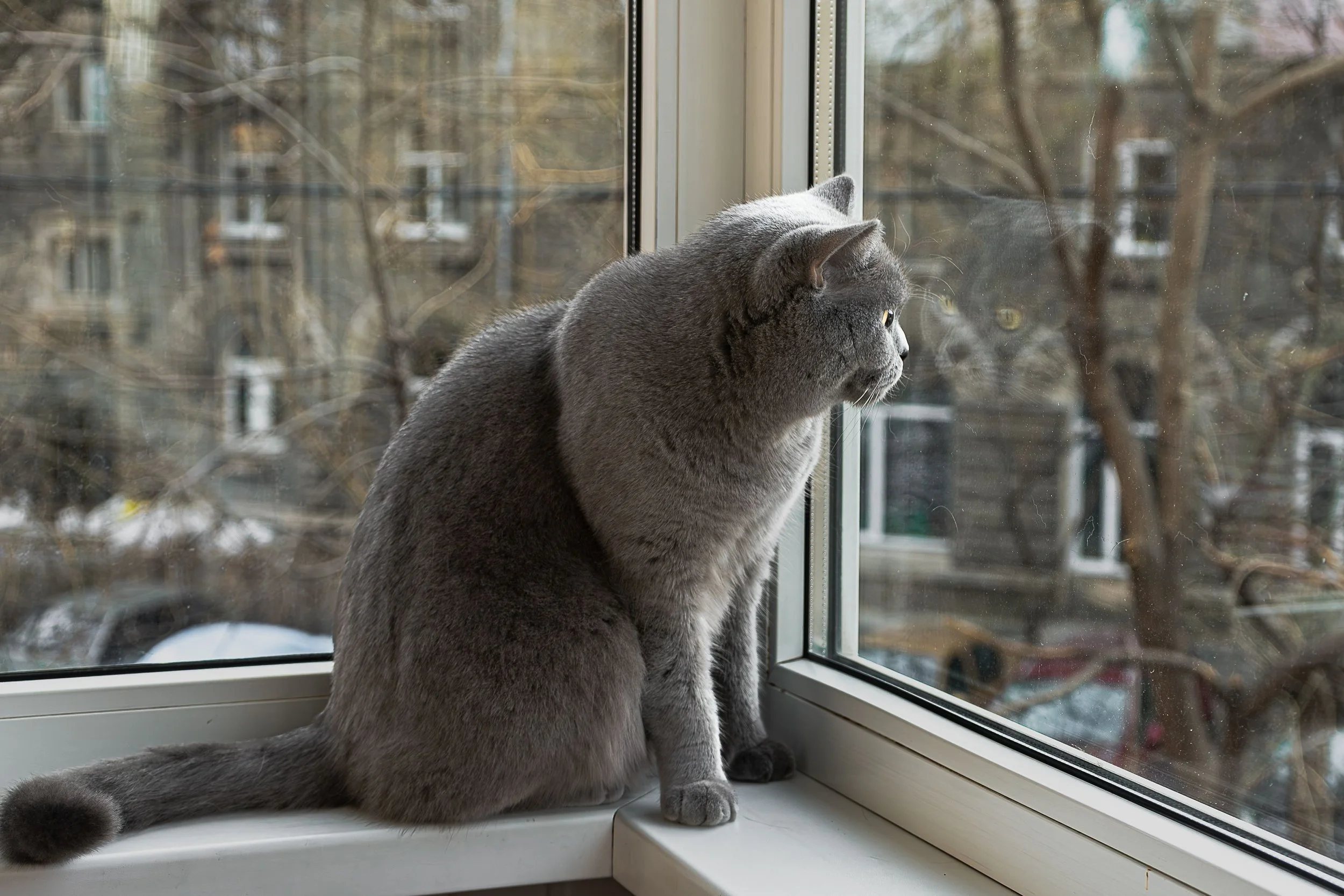
Explorer cats have a few telltale signatures. They're the first to investigate anything new that enters the home, whether that's a box, a bag, or a jacket draped on a chair. They maintain intentional patrol routes through their territory, keeping tabs on what's changed. They love windows not just for sunbathing but as information sources, tracking every squirrel, bird, and passing car. They respond to new toys with extended investigation before engaging, and to familiar ones with diminishing interest. Novelty is what lights them up.
One distinction worth noting: some Explorer cats are bold and confident, diving into every new experience headfirst. Others are curious but cautious. They want to investigate, but on their own terms and timeline. Both are Explorers. The cautious ones simply need slower introductions and more choice in how they engage. Fear Free Certified handling is especially important for this group: when exploration is optional and never forced, confidence builds naturally over time.
Why Exploration Is a Biological Need
Cats evolved as both hunters and territorial mappers. Their brains are wired to track scent changes, navigate varied terrain, and investigate stimuli that might indicate prey, predators, or shifts in their environment. For indoor cats, which is always our recommendation for feline safety and Wisconsin wildlife protection, that investigative drive doesn't disappear. It just needs somewhere to go.
The science supports this clearly. A 2024 study published in Animals (Wojtaś et al.) measured cortisol levels in shelter cats across enriched and standard environments and found that cats in enriched spaces had nearly half the cortisol of those without enrichment, 0.059 ng/mg versus 0.101 ng/mg. The researchers concluded that access to enrichment resources directly reduces long-term biological stress markers in cats. For Explorer types, whose instinct to investigate and map their environment is particularly strong, an enriched home isn't a luxury. It's what keeps their stress levels in a healthy range.
From a Fear Free perspective, what matters alongside the enrichment itself is agency, choice-led whenever possible. When an Explorer cat can approach, investigate, or disengage from something new at their own pace, their nervous system stays regulated, and their confidence grows. That principle shapes every enrichment idea in this guide.
Setting Up Your Home for an Explorer Cat
Explorer cats thrive in environments with layers, complexity, and built-in opportunities for discovery. The good news: you don't need a large home. You need a thoughtfully arranged one.
Vertical space is essential. Cat trees, mounted shelves, staggered window ledges, and stable bookcases give Explorers the elevated vantage points they're wired to seek. Height provides both information (a better view of territory) and safety (a retreat from ground-level stress). Wisconsin winters make outdoor time limited, so vertical indoor space becomes even more important for year-round enrichment.
Window stations earn their keep. A perch positioned at a window with bird or squirrel activity outside is one of the highest-value enrichment setups available for Explorer cats. It's essentially free, endlessly novel, and engages hunting circuits without any safety risk. A bird feeder placed outside the window turns a plain sill into a daily enrichment station.
Rotation is the mechanism. Explorer cats don't need more stuff. They need different stuff, regularly cycled. A cardboard box left for three weeks stops being interesting. Swapped in fresh, it becomes an investigation site again. Rotating enrichment items every few days costs nothing and makes a significant difference.
Catios and harness walks are worth considering. For Explorer cats with a strong drive for outdoor stimulation, a screened outdoor enclosure (catio) attached to a window or door gives safe access to fresh air, natural scents, and Wisconsin wildlife sounds. For cats who tolerate harness training, slow, cat-led leash walks are another option, always started indoors with gentle desensitization and never rushed.
8 Enrichment Ideas Explorer Cats Love
Window wildlife station. Set up a bird feeder or place a bird bath within view of your cat's favorite window. The movement, sounds, and unpredictable activity engage your cat's tracking and hunting instincts in the most natural way possible. A cushioned perch makes longer observation sessions comfortable.
Novelty box rotation. Every few days, bring in a new cardboard box or paper bag and let your cat investigate on their own terms. Add a pinecone, a crinkly wrapper, or a small amount of dried catnip or silvervine for extra sensory interest. The rotation itself is the enrichment. Explorer cats respond to newness.
Treat treasure hunt. Instead of a bowl, scatter small portions of your cat's food or treats across multiple rooms. This replicates foraging and patrol behaviors naturally, encouraging your cat to move through and investigate their territory purposefully. A few minutes of this replaces a meal's worth of mealtime boredom.
Sensory sniff bar. A shallow tray with cat grass, wheatgrass, or a few cat-safe dried herbs like chamomile or valerian gives Explorer cats a natural scent-investigation station. Change out the contents weekly. The olfactory engagement is genuinely enriching and calming for cats whose instinct is to track and analyze scent.
Slow stalking game with a wand toy. Move a feather wand slowly around furniture legs, behind door frames, and under blanket edges. The emphasis for Explorer cats is the investigation before the pounce: let them track, stalk, and study the movement before engaging. This mirrors the natural predatory sequence and is far more satisfying than fast, erratic waving.
DIY tunnel and box system. Tape several cardboard boxes together with cut-out openings between them to create a connected tunnel and hide network. Explorer cats love the ability to move through varied "terrain," disappear and reappear, and stalk from new angles. Reconfiguring the layout every week or two keeps it novel.
Cabinet discovery time. Pick a safe, low cabinet or drawer and open it intentionally for a supervised exploration session. Add a piece of crinkled paper or a treat tucked in the back. This gives Explorer cats a controlled outlet for their cabinet-opening instinct, satisfying the curiosity without the 2 a.m. consequences.
Forest floor sensory bin. Fill a shallow container with clean, pesticide-free materials such as dried leaves, a small pinecone, and safe foliage, and scatter a few treats throughout for supervised investigation. It replicates the complex sensory environment of outdoor exploration inside a safe container. Always supervise and ensure nothing gets ingested.
How Sploot Pet Concierge Supports Explorer Cats
Our in-home cat sitting visits are designed around genuine enrichment, not just care tasks. For Explorer cats, that means rotating enrichment items to maintain novelty visit to visit, setting up window stations and box systems, offering slow wand play that follows their investigative pace, and noticing what each individual cat finds most engaging. We serve Explorer cats across Fitchburg, Madison, Middleton, and Verona, pairing each cat with a small, consistent caregiver team who gets to know them, rather than recalibrating to someone new each time.
For Explorer cats who are also cautious or shy, our Fear Free Certified approach starts from where the cat actually is — not where we'd like them to be. Choice-led introductions, slow pacing, and respect for body language are how we build the trust that lets curious cats explore confidently, even with someone new in the home.
Ready to Enrich Your Explorer's World?
Explorer cats remind us that the living room, the hallway, and the windowsill are all genuinely interesting places, if we set them up to be. A little intentional novelty goes a long way for a cat who is wired to investigate everything. If you're ready to book Fear Free Certified care for your Explorer in Dane County, we'd love to meet them.
Also explore: The Sploot Enrichment Quiz | In-Home Cat Sitting | Cat Care
