
Thinker Dogs: Your Dog Isn't Being Stubborn. Their Brain Is Just Very Busy.
An enrichment guide for Thinker dogs in Madison, Fitchburg, Middleton & Verona
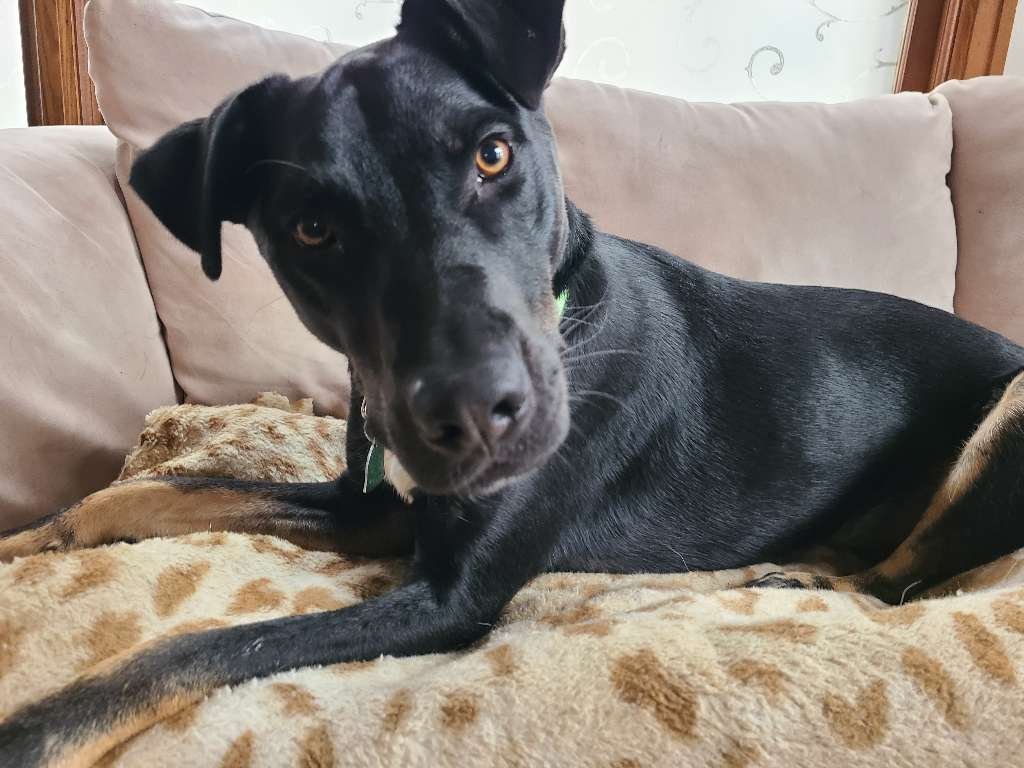
If your dog pauses at the bottom of a new puzzle toy and studies it before attempting a single move, or stares at you for a long, thoughtful moment before responding to a cue, as if running a quick internal cost-benefit analysis, you might be living with a Thinker.
Thinker dogs are the quiet strategists of the canine world. They're observant, analytical, and often a few steps ahead of the people around them in the most endearing way. Where Explorer dogs follow their nose and Player dogs follow motion, Thinker dogs follow logic. They notice patterns, anticipate routines, and feel most themselves when their brain has something genuinely worthwhile to work on.
For these dogs, mental stimulation isn't a nice bonus. It's a core daily need. Without it, Thinkers don't go looking for trouble out of spite. They go looking for something interesting to do. And what they find is sometimes a cabinet latch, sometimes your shoes, and occasionally whatever was sitting on the counter. With the right enrichment, though, all of that intelligence has somewhere satisfying to land, and what you get in return is a calmer, more confident, more settled dog.
If your dog took the Sploot Enrichment Quiz and landed as a Thinker, this guide is for them.
Is This Your Dog?
Thinker dogs reveal themselves through quiet brilliance. They observe before acting, pausing to assess something new rather than diving in. They figure out puzzle toys faster than expected, pick up training quickly, and will often surprise you by offering a behavior you taught once three weeks ago, completely unprompted. They love patterns, appreciate predictable rules, and tend to be highly attuned to their person's body language and cues.
One trait that catches some owners off guard: Thinkers can appear "stubborn." If you give a cue and your dog simply looks at you, they're often not refusing — they're thinking, or they're waiting for clarification that the cue was clear. These dogs are genuinely sensitive to inconsistency, and what reads as stubbornness is often a dog saying I need more information before I commit. Once you understand that, training a Thinker becomes a much more collaborative and enjoyable process.
The flip side of all that intelligence: boredom hits Thinkers faster than any other type. If their needs aren't met, they don't just nap it off. They get creative.
Why Mental Enrichment Changes Everything
When dogs engage in problem-solving, such as puzzle feeders, scent work, or learning new behaviors, their brains release dopamine, the neurotransmitter associated with motivation, anticipation, and reward. For Thinker dogs, who are wired to seek out cognitive challenge, this isn't a minor benefit. It's the mechanism behind why a good brain session produces a more settled, emotionally regulated dog than a long run sometimes does.
Research on canine cognitive bias (Mendl et al., published in Current Biology) found that dogs with enriched, positive daily experiences tend to interpret ambiguous situations more optimistically, approaching the unfamiliar with curiosity rather than anxiety. For Thinker dogs, regular cognitive enrichment doesn't just keep them busy. It actively builds their confidence and shapes how they see the world.
From a Fear Free perspective, the key for Thinkers is getting the challenge level right. Too easy and they disengage. Too hard and frustration tips into stress. The sweet spot is a puzzle that requires genuine effort but ends in success — what the Fear Free framework calls "set them up to win." Short sessions, clear cues, and ending while your dog is still having fun will always outperform longer sessions that push past their comfort zone.
Best Spots for Thinker Dogs in Dane County
Thinker dogs need environments where they can focus: places with enough sensory interest to engage them but calm enough to let them actually think.
Pheasant Branch Conservancy (Middleton) is excellent for structured nose work and pattern walks. The mix of prairie, marsh, and wooded edges gives Thinkers a varied sensory landscape to work through intentionally, and the quieter trails mean fewer distractions interrupting their concentration.
Hoyt Park (Madison) is one of the best Thinker parks in the county. The shaded wooded paths, stone structures, and peaceful atmosphere create a natural training environment, ideal for "find it" games, targeting, and trick work without the overstimulation of busier parks.
McKee Farms Park (Fitchburg) works well for controlled training in a manageable outdoor setting. The open paths and moderate foot traffic give Thinkers the light distraction of a real environment without sensory overwhelm, good for practicing known behaviors in new contexts.
Badger Prairie County Park (Verona) offers the open space that longer-distance targeting and send-out games need, plus enough trail variety to make pattern-walking genuinely interesting from visit to visit.
Familiar neighborhood routes shouldn't be underestimated for Thinkers. A predictable route with built-in micro-challenges, like "find the mailbox," "go around the post," or structured sniff breaks, gives these dogs mental exercise in a low-stress environment they already know and trust.
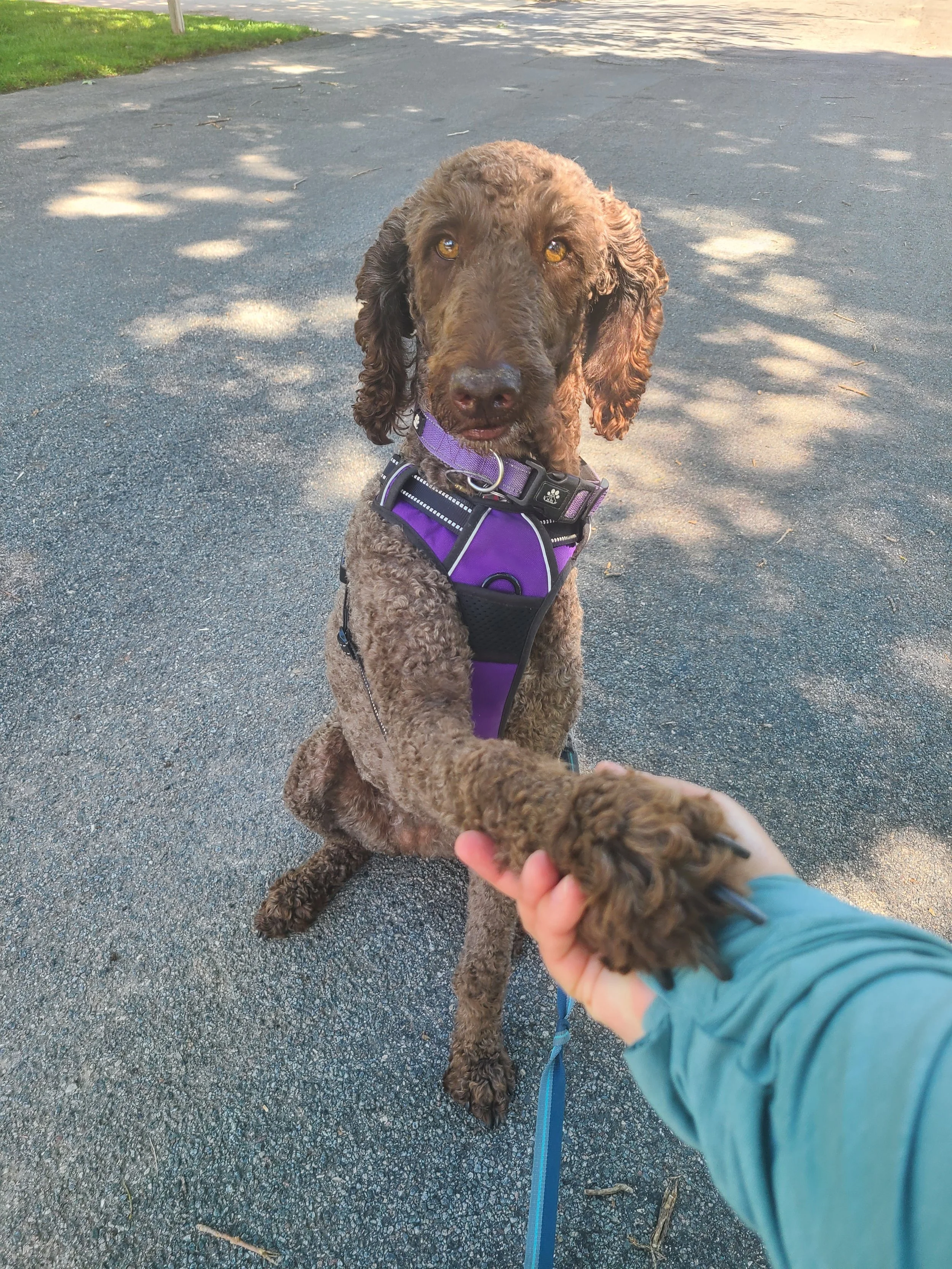
8 Enrichment Ideas Thinker Dogs Love
The shell game. Place a treat under one of three cups. Shuffle slowly at first, then increase the challenge as your dog catches on. This is one of the cleanest Thinker enrichment games available: pure problem-solving, fast setup, and minimal equipment. A key tip: always end the session on an easy win. Confidence matters more than difficulty level.
Puzzle feeders on rotation. Thinkers solve a puzzle toy and then find it permanently boring. The trick is rotation, cycling through several puzzles at varying difficulty so every mealtime is a slightly different cognitive challenge. Start simple, add complexity gradually, and occasionally reintroduce an "easy" puzzle to keep the association with food enrichment positive.
Trick chains. Link two or three known behaviors into a sequence: sit, spin, touch, down. Thinkers love structured complexity, and chains give them something to memorize and repeat with satisfaction. Keep chains short initially, two behaviors is plenty to start, and build from there.
Teaching object names. Start with two toys and a name for each. Say the name, point, and reward the correct selection. Many Thinkers eventually learn a surprisingly large vocabulary this way, and the communication dimension is deeply satisfying for dogs who are already watching your every signal. This one grows with your dog and never gets old.
Scent discrimination games. Present two items, one with a target scent and one without, and reward your dog for identifying the correct one. This is more advanced nose work and should be introduced in very short sessions, but for Thinkers who are ready for it, there's almost nothing more mentally engaging. The focus it produces is remarkable.
The box-in-box challenge. Place a treat inside a small box tucked inside a larger one. Let your dog figure out how to access the innermost reward. This encourages persistence and independent problem-solving, both things Thinkers are wired for, and can be made more complex by adding additional layers or requiring a specific behavior to "unlock" each stage.
"Find it" on walks. Tuck a treat into a visible crack in a log, rest it on a low fence rail, or place one in the fork of a tree at nose height. Cue "find it" and let your dog problem-solve the retrieval. This turns a regular walk at Hoyt Park or Pheasant Branch into a structured cognitive adventure without requiring any special equipment.
Pattern walking. Vary your pace and direction on a walk in a deliberate pattern, slow, fast, turn left, stop, slow, and reward your dog for staying attuned and matching you. Thinkers find this kind of structured communication with their person genuinely engaging, and it builds the responsive focus that makes them wonderful training partners.
How Sploot Pet Concierge Supports Thinker Dogs
Our Enrichment Walks naturally incorporate the kind of structured cognitive engagement Thinker dogs thrive on, including "find it" cues, targeted sniff breaks, and varied routes through parks like Hoyt Park and McKee Farms that give these dogs genuine mental work alongside physical movement. We serve Thinker dogs across Fitchburg, Madison, Middleton, and Verona, paired with a small, consistent caregiver team who learns their individual puzzle-solving style and keeps sessions appropriately challenging.
For in-home visits, our team brings the kind of intentional enrichment that Thinkers actually need, including scent games, trick reinforcement, and puzzle sessions, rather than defaulting to unstructured play that bores them in minutes. And for Thinkers whose intelligence is currently channeling itself into less welcome outlets, our Fear Free Certified private training gives their brain the structured, rewarding challenges that redirect that energy most effectively.
Ready to Put That Brilliant Brain to Work?
Thinker dogs remind us that enrichment isn't always about distance or intensity, sometimes the best ten minutes you can give your dog involves three cups, a treat, and a very focused expression. If you're ready to book Fear Free Certified care for your Thinker in Dane County, we'd love to meet them.
Also explore: The Sploot Enrichment Quiz | Enrichment Walks | In-Home Pet Sitting | Private Dog Training
